Skip to content

Archive for July, 2012

Israel and the Iranian Bomb

By Erica Chenoweth

Following up on Andrew Kydd’s terrific post on Israel’s thinking about the Iranian nuclear program, I wanted to respond to a few myths I heard while traveling through Israel lately. I want to make clear that these points are just impressions based on informal conversations with different folks.

  1. Israel can seriously disrupt Iran’s nuclear weapons program with air strikes.

My sense was that Israel’s armed forces do have the capability to take out most of Iran’s nuclear facilities, especially with help from allies. However, this would not at all permanently halt Iran’s nuclear program and would, at best, simply “mow the grass.” Credible reports suggest that Iran would be able to reconstitute the nuclear program within 2-3 years. What then? The argument is that they would be willing to do the same thing again and again until Iran stops its weapons program. This strikes me as unlikely to produce any favorable outcomes for Israel, while simultaneously being unbelievably costly and risky.

  1. The consequences of an Israeli air strike would be easy to contain.

Hezbollah poster in Lebanon following the 2006 war. Photo by Julien Harneis, via Wikimedia.

Proponents of this view suggest that Israel would be able to deter or contain unconventional retaliatory responses to air strikes against Iran. This is dangerously overconfident. First, this retaliation would almost certainly occur against soft targets outside of Israel, where Israel would have a tough time containing the threat. Second, some analysts calculate that Hezbollah’s long-term interests would deter it from launching rockets into Israel in the aftermath of an Israeli attack on Iran, arguing that Hezbollah leader Hassan Nasrallah would view Israeli retaliation as prohibitively costly. I doubt that. Despite inflicting thousands of casualties on the Lebanese during the 2006  war, Israel lost. If anything, Israel’s actions in Lebanon spread support for Hezbollah, not the reverse. Moreover, defending against a Hezbollah-supported attack would be extremely painful for Israel, especially given a recent report arguing that Israel’s military is not prepared to fight the next war. Third, while Israel may be confident in the ability of its Iron Dome missile defense system to intercept rockets fired from the Gaza Strip an emboldened Hamas does not make Israel safer, particularly if Hamas gains ground in the West Bank’s October elections. Finally, the wider regional consequences of an Israeli strike are impossible to anticipate. But it is certain that an Israeli attack on Iran would increase anti-Israeli sentiment in many of Israel’s neighbors, including Egypt, where Israel has a peace treaty at stake. Although Egypt’s SCAF likely favors maintaining the peace treaty with Israel and likely shares Israel’s concerns over the prospect of an Iranian bomb, the Egyptian military council might be under greater pressure to make life difficult for the Israelis if the Israelis do attack.

  1. The international community is sending the signal that it is “OK for Israel to bomb.”

It was rather shocking to hear someone express this particular view. The basic story is that some people see the international community’s reluctance to take a stronger line toward Iran as a tacit permission for an Israeli strike. From the outside, this seems completely off base. First, the international community has ramped up pressure on Iran in recent months, presumably indicating that a diplomatic solution is still judged possible. Second, just because another state hasn’t yet expressed interest in the highly costly,  risky, and low-probability-of-success option of attacking Iran is far from tacit permission for an Israeli strike. Perhaps the Israeli government has not heard a clear “no” from any major powers. But a lack of clear opposition to an Israeli strike doesn’t mean “go ahead and bomb.” More likely, the silence from Washington reads “we don’t know what to do either” or “we don’t have any better ideas.”

Despite these arguments, I came away from my recent visit with the sense that an Israeli attack on Iran is highly likely.

Why? Because of Israel’s visceral commitment to never allow another Holocaust. The Holocaust analogy underpins Israel’s view that the Iranian nuclear program is an existential threat; making the pace of Iranian nuclear development totally alarming, the seeming ambivalence of the international community eerily familiar, and the ultimate outcome of a nuclear-armed Iran totally unacceptable.

And therefore, right or wrong, if the international community is indeed interested in preventing an Israeli strike on Iran, then major powers must not only continue to take steps to slow or stop Iranian nuclear proliferation. Major powers need to also figure out ways to provide credible security guarantees to Israel regardless of what happens with Iran. Otherwise, Israel will likely try everything within its power to stop what Israeli hawks see as an existential threat — even if the operation is a disaster — rather than sit idly by and watch events unfold.

Operation Ramadan?

By Oliver Kaplan

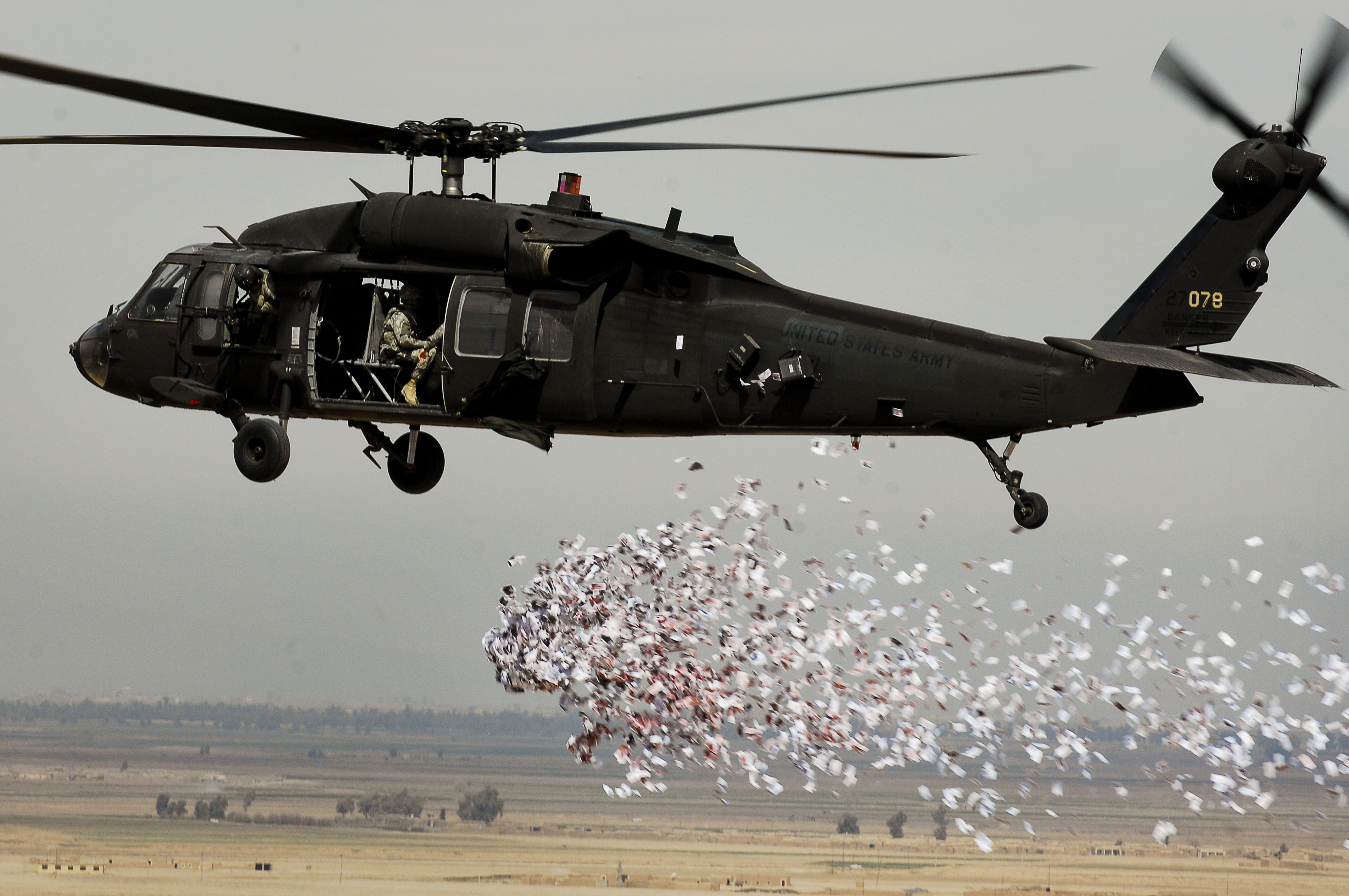
US Army PSYOP Leaflet Drop, Iraq, 2008. Via Wikimedia.

Today I’m writing about the possibility of conducting psy-ops in Syria, Colombia-style. One year ago, observers decried the unabated killings of protestors and civilians in Syria during the Muslim holy month of Ramadan. Could this year be different? Although conditions have deteriorated significantly over the past year, this Ramadan period (July 20-August 18) could offer a key opening to persuade fighters to stop attacking civilians, to lay down their arms, and be with their families.  With great respect for this important Muslim holiday, I offer a psy-ops campaign for consideration.

Colombia can offer a model for such a campaign as it has become an innovator of new strategies to stanch armed conflict due to the duration and severity of the violence it has suffered. During December of 2010, in what was dubbed “Operation Christmas,” the Colombian military installed and decorated Christmas trees with demobilization messages in the jungle at key guerrilla crossroads and ran a media campaign to persuade fighters to lay down their arms and go back home to their families (and also persuade guerrillas’ family members to lure them back home). According to the Colombian government, this led to an increase in demobilizations.

In applying such a model in Syria, efforts could be aimed speeding defections within the Syrian military and its allied militias (in contrast to Colombia, where rebels were the objects of the operations). An effective campaign would not require that Christmas trees or Muslim relics be scattered around Homs or Damascus. Rather, moral messages about the sanctity of life, perhaps tied to relevant religious teachings, could be especially salient during Ramadan. These messages could be spread through media strategies such as Twitter, radio, or airdrops of pamphlets, and would be a relatively costless tactic to try. Recent weeks have seen a growing number of defections from the Syrian military, including a top general who was a key Assad ally. Creative psy-ops at an opportune moment could help further tip the balance.

Poli-Sci-Fi

By Joseph Young

Falling Skies.

International politics is a tough thing to study.  We can’t necessarily treat the interactions of states like a laboratory: perform a study, tweak, replicate, and then repeat. Yet, we want to explain the world, and sometimes even predict important outcomes.

For example, what should we do if a zombie horde attacks?  Dan Drezner has a plan informed by his experience as an international relations theorist.

Poliscifi, or the application of political science theories to science fiction, is more than just fun (it is fun, try it).  Thought experiments have a long tradition in philosophy and allow us to overcome some of the problems associated with the difficulty of experimentation in international relations (field and laboratory experiments are gaining in prominence in the discipline, but that is for another post).  After recently watching Falling Skies, Steven Spielberg’s dystopian alien invasion series [Spoiler Alert], I immediately began to poliscifi.  What should we do if aliens showed up? What if they proved to be aggressive?  What if we were horribly outgunned?

For those who haven’t seen it, the basic premise of Falling Skies is this: aliens show up, nuke nearly all of the world back to the Stone Age, take over, kidnap kids, and systematically kill anyone else they find.  Our hero is a college professor (I’m not kidding) who studied history and applies his knowledge of insurgency and military history to the current alien crisis.  While there is dissent among the survivors, our hero and his pack of humans decide on a classic guerrilla strategy.  That is, make the invasion costly to the aliens in an effort to drive them out.

The beginning of the 1996 Will Smith film, Independence Day, posed a related question about how to respond to alien contact and the subsequent story has been a constant source of poliscifiFalling Skies takes us immediately to the point of killer aliens and the best response to their aggression.

Thankfully, we have theories of how weak actors can win in war. Can they apply to aliens?  Let’s find out.

Andrew Mack’s seminal 1975 World Politics essay suggests that the weak (read humans) can win wars against the strong (think Aliens).  Mack’s essay is a good place to start both because of its prominence as well as applicability.  Mack is writing in the shadow of one of the great defeats of a strong invader by a weak defender — the Vietnam War.  There are some important similarities between the Americans dropped into the jungles of Vietnam and the aliens dropped onto the Earth in Falling Skies.  Neither weak actor can target the civilians of the invader (terrorism is out), each weak actor is restricted to light weapons in a fight against a nearly unrestrained opponent (to be fair, the US never nuked the North Vietnamese, but we did consider it), and each weak party took heavy losses (admittedlyFalling Skies’ humans fare worse then the North Vietnamese did).  As Mack makes clear, if capabilities were all that mattered in war, then the weak would always lose.  For Mack, resolve is the trump card of the weak.  When the North Vietnamese took such huge losses, they demonstrated to their stronger opponent that they would go to the mat.  So the lesson for a strong invader is to choose weak actors with low resolve.  How can we know this unobservable characteristic?

Game theorists suggest that the North Vietnamese revealed their type — the kind of group willing to absorb lots of deaths for their political goals.   If the United States, or France for that matter, had known the Vietnamese type as a materially weak but resolute actor, this whole thing might have been avoided (probably not though).

Mack also suggests that the strong actor loses when these costs are broadcasted to the civilians of the stronger side.  Since the strong party can’t lose the battles, they can only lose the political struggle.  They lose the politics by losing their own civilians.  So we learn from Mack that willingness to absorb the costs of war by the weaker party and creating divisions among the other side’s civilians is how to win.

The humans in Falling Skies are doing the former, but it is unclear what effect this has on the Alien’s population at home.  We would have to assume there is such a population, and that since they presumably are a species bent on survival, that they would at some level be sensitive to these costs.  Mack’s theory would suggest that the humans will win as long as they keep absorbing costs (read: getting killed) yet remain actively resisting and imposing costs on the Aliens—a scenario that Falling Skies seems to be roughly employing.

Ivan Arreguin-Toft offers an alternative to our conundrum that is independent of regime type and the disparity in technology. Arreguin-Toft offers an answer based on strategic interaction. In his theory, each actor’s choice set in war is boiled down to a direct or indirect strategy.  Direct strategies target the other side’s military where indirect attacks target the other side’s political will.  For Arreguin-Toft, similar strategies (Direct-Direct, Indirect-Indirect) by each party will lead to a strong party win.  Opposite strategies will lead to the weaker party winning.   The aliens began with an indirect strategy or what Arreguin-Toft calls barbarism.  Kill everyone, terrify them, and crush the will to resist.  At then beginning of season 2, the Aliens offered our Hero a deal to place the surviving humans in a reservation as long as the humans lay down their arms. As mentioned above, the humans are using guerrilla tactics to harass the Alien military, also an indirect strategy.  Based on a quick application of Arreguin-Toft, it seems the humans would lose — an unrestrained Alien invader will eventually kill all the humans.  What should the humans do?  A Cold War joke about nuclear bomb drills may provide the answer, stick your head between your legs and…

Erica Chenoweth and Maria Stephan suggest that peaceful resistance can be more effective than violence, even when facing a harsh autocracy, and maybe even Aliens.  In this case, however, I doubt Gandhi trumps Aliens.

This, of course, is just a thought experiment.  Should it be something we really have a plan forOr is too remote of a chance?  Does this go in the same basket as nuclear terrorism? Whether the Pentagon should have such a plan has been a hot topic on far left and far right websites. While the Pentagon may or may not have plans for such a scenario, this cursory glance suggests that a guerrilla strategy is the least worst strategy.  What do you think? Am I missing an important theory that might apply?  What is the best response?

Kabuki Theater at the Afghanistan Donors’ Conference

By Roland Paris

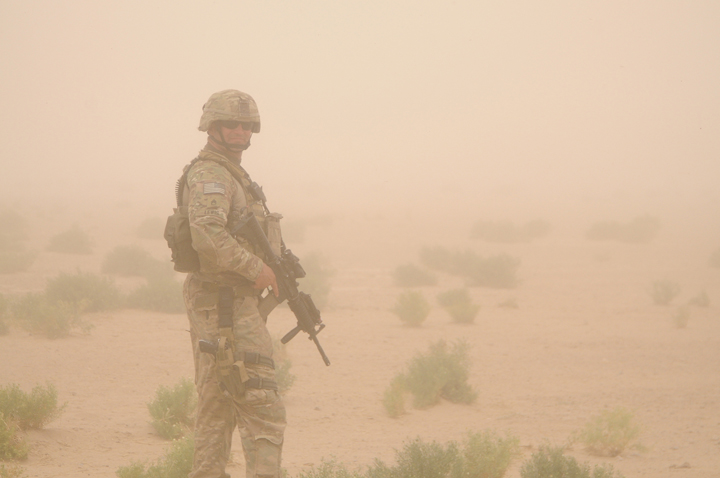
US soldier in Afghanistan. US Navy photo by Lt. Benjamin Addison, via ISAF Media.

I have an op-ed article in yesterday’s Globe and Mail, a Canadian newspaper, which the editors titled “Is corruption the cost of saving Afghanistan?” The first few lines of the article convey the gist of my argument:

It was fitting that last weekend’s international donors’ conference on Afghanistan took place in Tokyo: The event resembled the city’s famous kabuki theatre, with its ritualized drama of grand gestures and hidden meanings.

The centrepiece of the meeting was a pledge by donors, including Canada, for $16-billion in development aid to Afghanistan over the next four years in exchange for the Kabul government’s commitment to fight corruption, among other things.

In fact, there is virtually no chance that the Afghan government will tackle corruption – and everyone knows it…  [T]he unspoken reality is that the United States, which drives international policy on Afghanistan, appears to have resigned itself to this kleptocracy.”

In the rest of the article I explore the question of why international donors continue the charade of reaching new agreements  on anti-corruption measures with the Karzai government.  I argue that this charade mollifies public opinion in the donor countries, which might otherwise turn strongly against the funding of a corrupt government in Afghanistan.  (My argument echoes Michael Barnett and Christoph Zuercher’s concept of a “peacebuilders’ contract” between international interveners and local leaders to create the appearance of change “while leaving largely intact existing state-society relations.”)

I didn’t have space in the op-ed to examine specific terms of the “mutual accountability framework” that emerged from the Tokyo donors’ conference. A number of media reports from the conference stated that the international community was now demanding reform in exchange for additional development aid, and that a portion of these funds would henceforth be tied to the Afghan government’s performance in meeting specific reform objectives, including anti-corruption targets. Indeed, in a background briefing to reporters, a senior State Department official encouraged journalists to describe the mutual accountability framework as “something important,” in part because it was “pretty specific” about incentives for the Afghan government to effect reforms.

The problem with these accounts is that there are, in fact, very few anti-corruption measures in the framework, and most of the measures that are included are vague enough to be finessed. Worse, there is no effective enforcement mechanism. The agreement requires, for instance, that the Government of Afghanistan “enact and enforce the legal framework for fighting corruption including, for example, annual asset declarations of senior public officials including the executive, legislative and judiciary.” It is not difficult to imagine the Afghan government issuing incomplete versions of such declarations based on creative interpretations of what counts as “assets.”  In any event, there is no sign that the Afghan government will incur significant penalties – political or economic – if it fails to meet these undertakings. While the mutual accountability framework says that joint monitoring bodies and ministers will meet regularly to review progress, no sanctions are specified. Apparently, individual countries must decide on penalties if the goals are ignored.

True, the document suggests that donors will make more of their aid contingent on progress towards fighting corruption.  Many journalists reporting from the donors’ conference highlighted these provisions of the framework. “Up to 20 percent of the money would depend on the government meeting governance standards,” wrote Jane Perlez in the New York Times, for example.  However, the document actually says that donors will “aim” to increase the share of their aid in incentive programs “to 10 percent in 2014, with a goal of 20 percent of funding through incentive mechanisms by the end of the Transformation Decade.” When is the end of this “Transformation Decade”?  That would be 2024.  By that time, the only people who will remember this document and its commitments will be a handful of Ph.D. students working on the archives of the Afghan mission.  Furthermore, “aim” is weaker language than “commit,” and 10 percent of development assistance – the amount that donors will “aim” to tie by 2014 – is not much.  Most likely, when 2014 rolls around (which promises to be a tumultuous year, given the scheduled departure of U.S. combat forces and Afghanistan’s presidential election) even this modest undertaking will be overshadowed by events.

That is my point:  The fact that the anti-corruption provisions in the Tokyo mutual accountability framework are so few, so vague, and so lacking in means of enforcement lends support to my thesis that they are intended primarily for show, not for genuine implementation.

These paragraphs did, however, perform another important function: generating reports in Western newspapers suggesting progress on anti-corruption in Afghanistan, which in turn provided a measure of political cover for Western governments to continuing spending large sums of money to support an Afghan governance system in which corruption is endemic.

Give State (Repression) a Chance

By Christian Davenport

All we are saying… is give states a chance (repeat for effect).

Next time you write an article or book on political violence, think about state repression — genocide, one-sided violence, human rights violation, torture, protest policing, counter-insurgency/terrorism — for a second. Just a second. After several decades of rigorous effort, it is fair to say that the majority of our attention in political science has been given to interstate war and civil war. I would say that it would be interesting to count the number of articles over the last five years on terrorism and compare it to the number of articles on repression but regardless, I stand by the claim that most of our attention has been focused on those activities that challenge political authorities. Actually, it’s probably not even close.

Why is this the case? Why do governments get a pass? Well, it’s not because of the actual number of deaths associated with different forms of violence. Chinese and Russian repression alone is believed to account for the deaths of over 200 million people. It’s also not because repression isn’t interesting; Hitler, Pol Pot, McCarthyism and the Red Scare, Cardinal Richelieu, Assad… what’s not to like (or, hate)? It’s the stuff Hollywood films are made of — literally. We also don’t suffer from a lack of information about government repression. The Sudanese state’s actions in Darfur (or as my autocorrect wants to say, “earful”) and their architect Omar al-Bashir are in the news almost daily (no), weekly (no), quarterly (ummm), and victims of state repression have spread globally, with some more than ready to talk.

I would argue that scholars, especially those in political science, who study challenges to governments do so because this is what governments want us to study. In many ways the targets of political scientists’ gaze has been shaped by those whom we examine. This is what governments and foundations pay for — mostly. What’s the last call or program from a government or prominent foundation regarding state repression that you recall seeing posted? Minerva that. The US State Department does produce reports on government oppression in individual countries, but there is little discussion about the war on terror’s inherent coercive government activities; certainly less than the discussion devoted to potential government challengers. Seen any government-sponsored commissions exploring state repression outside of those sparked by the very-public — and subsequently ignored — abuses at Abu Ghraib and Gitmo? Interestingly, newspapers are likely to cover anti-state behavior (historically relying upon governments themselves for stories) as well as what those who use these sources are likely to study. Now I’m not dissing Amnesty, Human Rights Watch, or State Department country reports, but these sources don’t go back far enough, and you know how political scientists like a good time series. New data is being collected but generally it is not focused on repressive behavior. Finally, stories about anti-state challengers are what citizens want to know about — the subversives are out there, you know.

As a result, we end up knowing much less about governments and repressive action than we do revolutionaries and revolution, protesters and protest, rebels and rebellion, and terrorists and terrorism. Here’s the kicker: it turns out that government repression is intricately connected with all of the contentious actors and actions identified above, or at least research is beginning to suggest this relationship. To understand the mass resistance of the Arab Spring, therefore, you have to understand the “Arab Winter’s” decades of regime repression. It might be good for the Arab “Summer” and “Fall” as well (just wait for these, they’re coming). While debates rage about whether or not and, more importantly, how aggregate/distant proxy variables such as democracy and economic development affect societies, barely a murmur has been heard about the importance of state repressive action in provoking challenges to the state itself. Even less is mentioned about what governments do covertly against potential as well as actual challenges before, during, and after overt challenges manifest.

Next time you pick up the pen, touch the keyboard or turn on that dictation software, therefore, all we are saying… is give states a chance (repeat for effect)

Note: John Lennon might have mixed emotions about my use of the phrase but after reflecting I think he would agree. It also doesn’t really fit the song’s rhythm either, but maybe Kanye West could come up with something — he is a genius after all.

Israel, Iran, and the Holocaust Analogy

By Andrew Kydd

As the negotiations over the Iranian nuclear program grind to a halt, we are likely to see the topic of an Israeli preventive strike on Iran return to the prominence it enjoyed this spring. Back then analysts speculated that it was only a matter of time before the Israelis attacked, and that the Obama Administration would find it politically impossible, in an election year, to prevent them from doing so or to punish them after the fact. Sanctions and negotiations were billed as the last chance to prevent war, a chance appears to be slipping away. It is therefore not too soon to rejoin this debate, for perhaps the last and decisive time.

One historical analogy that is constantly raised in this context is the Holocaust. The Nazi genocide against the Jews, killing six million, led to the founding of Israel and indelibly colored Jewish views of the world. The lesson Israelis have drawn from it, and rightly so, is that you must be strong in a world of people who hate you, weakness invites disaster. The analogy has been invoked to justify a preventive attack on Iran. Anti-semitism and holocaust denial is rife in Iranian leadership circles. They seek nuclear weapons with which they could kill millions of Jews. Therefore they must be stopped from developing them. This syllogism seems very convincing to potential targets of Iranian nuclear armed missiles, understandably.

The Israelis of today, however, are not the European Jews of 1939. For one thing, they have a state with the most powerful conventional armed forces in the region. For another, Israel possesses around 200 nuclear weapons. This means that the holocaust analogy runs into certain difficulties. At the Wannsee conference of January 1942 the top Nazi officials formalized their plans for the final solution. Can we imagine the same decisions being made if the Jews of 1942 possessed a state with 200 nuclear weapons? In that case, opting for genocide would mean accepting the loss of Berlin, Hamburg, Munich, and 197 other German cities, on the day of the initial assault. It is difficult to imagine that these officials would have made such a decision, or been allowed to.

What this suggests is that the correct type of historical analogy is not to the holocaust or to mass murder in general, but to full scale military assaults on formidable adversaries. These decisions are where the risks are all or nothing and the costs can run into the tens of millions of casualties. This is the province of the study of war and deterrence. The key events to look to for analogies then become the German decision for war in 1914, and again in 1939, 1940 and 1941, and US-Soviet relations during the Cold War. What does this history have to tell us? As these dates suggest, states have been willing to undergo the risks and costs of initiating total war against strong adversaries. In 1914 Germany attacked, fearing that it was growing weaker in comparison to Russia and would eventually be unable to deter it. In 1939, 1940 and 1941, Hitler attacked Poland, France, Britain, and the Soviet Union, convinced that blitzkrieg tactics would produce quick victories, and was correct twice. However, since the invention of nuclear weapons no great power has ever launched a full scale assault against another great power. Indeed no state has ever launched a full scale assault against a clearly nuclear armed state. The one borderline case is the 1973 joint Egyptian-Syrian attack on Israel, which some believed possessed nuclear armaments. However, Israel had not tested nuclear weapons, openly deployed them, or made any deterrent threats, so its nuclear deterrent could hardly be weaker. In addition to the Yom Kippur War, China and Russia skirmished over some small islands in the 1960s and India and Pakistan fought the very limited Kargil war in 1999 after their nuclear tests. However, since the advent of nuclear weapons we have seen no all out assaults reminiscent of Operation Barbarossa or the Six Day War on a nuclear-armed state. Raw historical analogy would therefore suggest that nuclear weapons have a perfect track record at deterring full scale attacks.

A final analogy to consider is the US-Soviet Cold War, a protracted struggle between nuclear armed adversaries during which nuclear war appeared to be a potential outcome of at least three crises: Berlin, Cuba and Able Archer. Deterrence optimists point out the obvious macro historical fact — none of these crises led to war. Pessimists argue the details and point to the real risks that arose. This is a reasonable, indeed vital, debate to have and where analysis should focus in assessing the risks of letting Iran go nuclear.

Bad Options for Syria

By Dan Byman

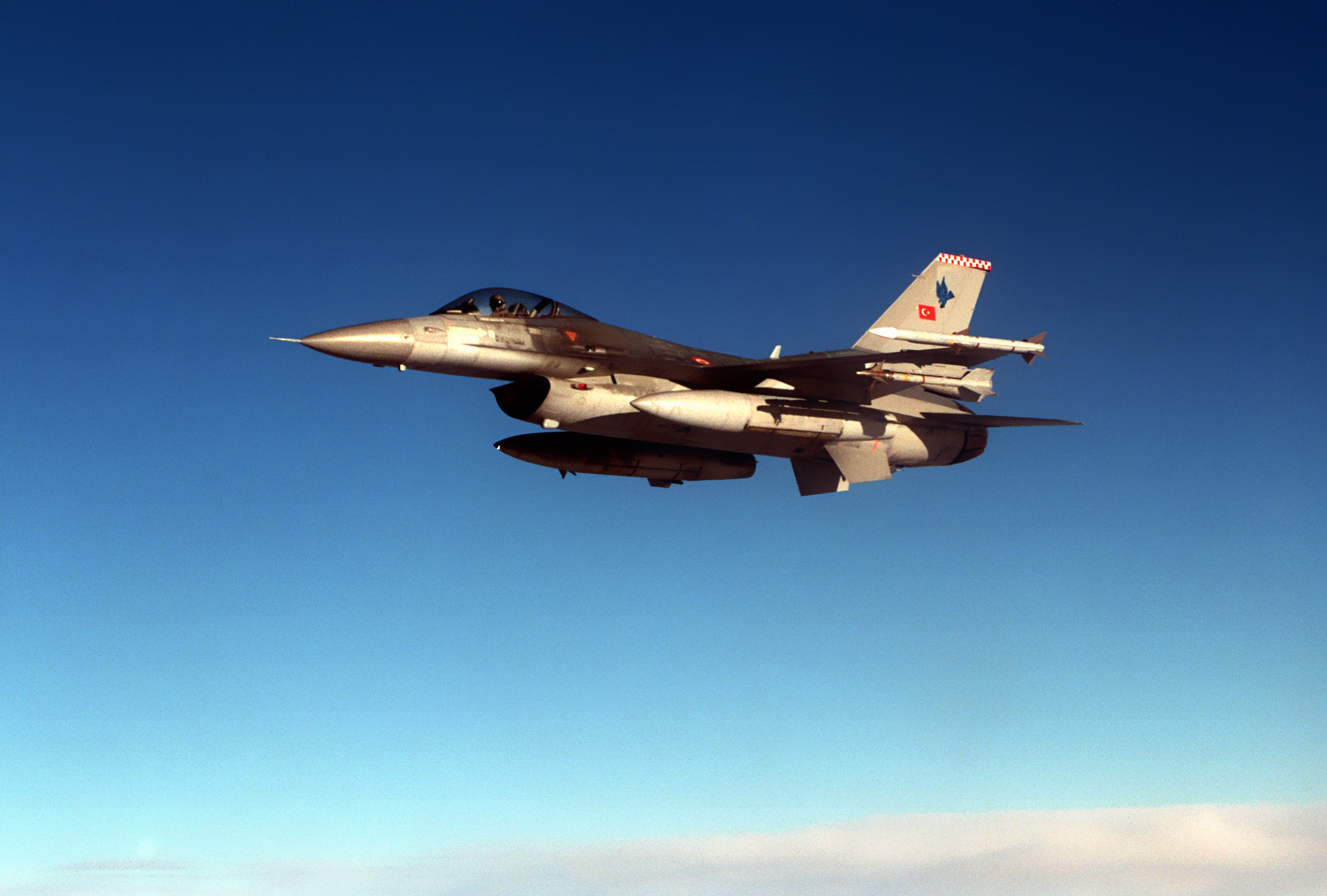
Option Five. US DoD photo by SRA Alan Port, via Wikimedia.

One of the joys of being an academic and a think tanker is that you can take potshots at policymakers from the sidelines and explain to them — ideally in slightly condescending terms — why their policies will fail, without having to spell out in any serious detail an alternative that has a snowball’s chance of gaining international and domestic support and working on the ground. For over a year now, I and many others have warned that the situation in Syria was going from bad to worse. The initial hope that Bashar al-Asad would go the way of Egypt’s Mubarak and Tunisia’s Ben Ali was not foolish – it was just wrong. Bashar’s regime was pressed hard, and many informed observers saw him as (here I’m quoting the technical term used by a colleague I won’t name) “toast.”

For at least the last six months and probably the last nine, however, such optimism was starry eyed. Syria is a grinding stalemate, with the regime unable to subdue the demonstrators while the opposition is too weak militarily and divided politically to triumph. Meanwhile, the violence escalates. So what to do?

Let’s rule out doing nothing and, for that matter, direct American military intervention à la Iraq. The doing nothing option is the default, and perhaps in the end justified, but it doesn’t require much imagination or expertise to figure out what it means. No one (okay, almost no one) is calling for the United States to invade Syria either – one of the few things that Republicans, Democrats, the Syrian opposition, and the Asad regime can agree on. So we’re left with a few in-between options, and I’ll briefly lay out my views on the pluses and minuses of each.

Option One: Talk Talk (aka “The Annan Plan”). The United States, working with allies, could try to convince the Asad regime to accept a ceasefire and work toward a political transition that removes the dictator and a few cronies and replaces them with more apolitical figures (Yemen is often mentioned as a model for this). The problem is that Asad doesn’t seem inclined to go and is using the breathing space negotiations provide to kill even more. And even if he left, the apparatchiks who would take his place are not technocrats seeking only to serve the Syrian people but rather part of the old system – the same one that the Syrian opposition vehemently rejects and that, from a US point of view, is tied to Iran and other baddies. So while this option fits the criteria of doing something to end the violence, few seem to want this outcome, and there doesn’t to be a way to force the issue.

Option Two: Chokehold. Here we get to standard coercion – using the threat and reality of diplomatic isolation and economic sanctions to push Asad and his regime to give in. However, as University of Chicago political scientist Bob Pape pointed out in his work on sanctions over a decade ago, it takes a lot to force an autocratic regime to surrender power and sanctions usually lack the necessary oomph. And indeed sanctions can strengthen the dictator’s power as they devastate the independent middle class and increase the importance of access to the regime. In Syria, sanctions hit the country hard, but support from Iran and Russia, smuggling, and other work-arounds that countries figure out in duress seem to be allowing Asad to hold on. Syria as a country, however, is being hollowed out.

Option Three: Help the Refugees. Okay, if we want to avoid too much involvement, maybe we can just help the refugees and otherwise alleviate a humanitarian disaster. Here social scientists have a lot to say, with Richard Betts of Columbia warning that claiming to be impartial while intervening is a “delusion” while Sarah Lischer tells us that refugees can often be carriers of conflict. And, of course, helping refugees may perversely increase refugee flows and take the wind out of the opposition’s sails, strengthening the regime by default. And whether we help or not, the killing continues.

Option Four: Arsenal of Democracy. If we won’t do the job ourselves, and negotiations and pressure won’t work, perhaps we can help the Syrian opposition win the war. This, in case you were wondering, is the option I favor. The opposition is being armed anyway, and U.S. and allied support might help make them more competent militarily and strengthen the moderate elements among them. A comprehensive policy to arm the opposition also might reduce its fragmentation. Over time, the opposition could – note the conditional word and all the “mights” I’ve been using in this paragraph – become more formidable. Yet for all that this option has many problems. The opposition, even after over a year of bloodletting, remains deeply divided. And providing the opposition with arms risks strengthening military voices over peaceful ones. The equipment and training disparity between the Syrian Army, poor as it is, and the opposition remains considerable, so even if this approach works it will take quite a long time, during which many innocent Syrians will die. And then the Syrian opposition gets to run a fractured and devastated country.

Option Five:  Angels on Their Shoulders. To speed things up, Turkey, NATO, or the United States – pick your formidable military – could help the opposition as was done in Libya. Using airpower could tip the balance and enable the opposition to overcome the regime’s military advantages in far less time than Option Four would take. Syria, however, is not Libya. Its military and air defenses are better, the terrain is less favorable to air operations, Iran (and probably Russia) would “balance” against intervention and back Assad further, and there would be less diplomatic and domestic support.

All these options are flawed. And, not surprisingly, the most effective ones are the most difficult to pull off. For those who are gluttons for punishment, several of my colleagues at Brookings and I wrote a related, and longer piece on a similar topic. My hope is that others reading and writing on this site will weigh in to expand on these options or lay out new ones, as I think we can all agree that current U.S. policy is getting nowhere.

Quick Report from Israel and the Palestinian Territories

By Erica Chenoweth

Two weeks ago, I thought a permanent status agreement between Israel and the Palestinian Authority (PA) was within reach. I’ve changed my mind. Today, I think such an agreement is nowhere in sight. I’ve just returned from an 8-day exchange mission to Israel and the Palestinian Territories with a group of American and Chinese international relations professors. Here are a few brief reflections based on conversations we had with top Israeli and Palestinian officials.

  1. Israel is comfortable with the status quo. The status quo involves maintaining a strict seal around the Gaza Strip while and slowly consolidating control over the West Bank (largely via settlement activity). Liberal voices calling for a two-state solution in the early to mid-1990s have been frustrated by the failure of Oslo and the violence of the Second Intifada, which have largely marginalized such voices compared with those on the right. East European and Slavic immigrants, who now make up a sizable portion of the electorate, support hawkish governments and settlement expansion. Netanyahu’s government will not be a first-mover in the process, showing disdain for any concessions to the PA and neglecting to signal to Palestinians a sincere desire for a two-state solution. Netanyahu’s government did enact a 9-month settlement freeze, which allegedly gave Palestinians the opportunity to come to the table, but the Palestinian Authority either missed the signal or declined the opportunity to act. Israel has since continued settlement expansion and will have sealed off the Palestinian Territories with the security barrier by the end of 2013. The mood in Israel is apathetic at best, and cynically expansionist at worst.
  1. The PA doesn’t have a plan. The PA, which is barely holding onto power in the West Bank, is out of ideas for how to resume the peace process, despite the urgency they feel about doing so. Because of settlement expansion and the building of the separation barrier, they feel like time is against them. In fact, the Fatah-dominated government is facing its own set of challenges regarding legitimacy, governance, and development. Internal rivalries have Fatah leaders zipping around Ramallah in motorcades in between heavily-guarded fortresses (meant to protect them from other Palestinians). The PA cannot or will not stop routine rocket attacks from Hamas-controlled Gaza into the Negev. As a last resort, the PA plans to pursue an internationalization strategy—securing “occupied state” status in the UN General Assembly—which may not result in meaningful leverage against Israel in the pursuit of the two-state solution anyway. Regardless of the outcome, many fear that Hamas is gaining ground in the West Bank, marginalizing liberal Palestinians who may have cooler heads in the pursuit of statehood. Needless to say, the mood is grim and urgent.
  1. The international community is distracted. With Iran testing long-range missiles, Syria’s gruesome civil war, the crisis in the Eurozone, and the Muslim Brotherhood winning the presidency in Egypt (and perhaps elsewhere), Israel’s allies are tied up. The American president has few incentives to get aggressive with Israel until after November 5, and Europe is otherwise occupied. Given the conflict’s protracted nature, potential brokers do not feel the same level of urgency about making progress on the two-state solution that Israeli liberals and Palestinians do. The mood in the international community is collective denial.

Of course, we talked mostly with elites, not with many ordinary people on the Israeli or Palestinian side. It would certainly be interesting to hear reactions from non-elites to see where they differ about these interpretations.

The most poignant part of the Israeli-Palestinian conflict is that both Israel and the PA know the rough contours of the permanent status agreement. These have been hammered out over numerous phases of negotiation (the most recent being Annapolis in 2008—already four years old). And given regional changes, devising and implementing a viable two-state solution seems as urgent as ever.

Yet as both sides agree, the problem isn’t finding a mutually agreeable solution. The problem is getting from here to there. And given the political environments in both Israel and the Palestinian Territories, implementation seems to be growing ever more distant with each passing day.

“Doable” Options in Syria

Guest Post by Matthew Krain

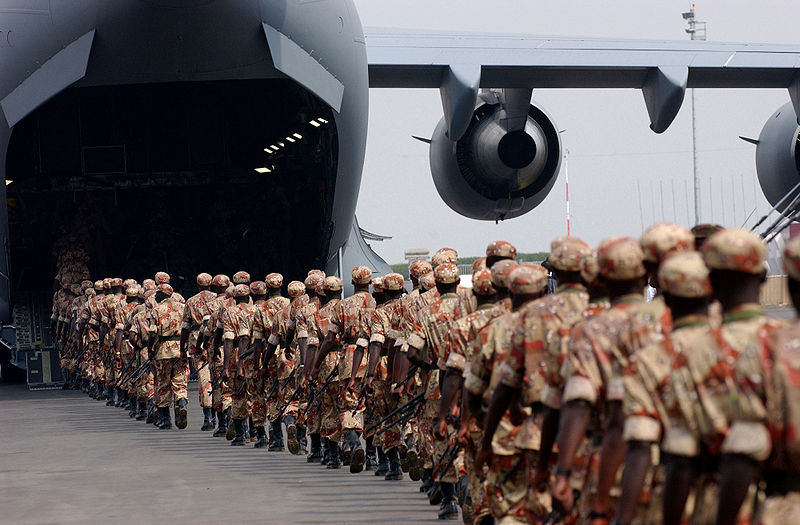
Rwandan Soldiers deploying to Darfur, 2005. USAF photo by Staff Sgt. Bradley C. Church, via Wikimedia.

In the face of a systematic campaign of atrocities against Syrian citizens, challenging the perpetrators is the most effective way to slow or stop the killing. The US and its allies should ratchet up existing sanctions, and pressure Syria’s partners to stop undermining sanctions’ effectiveness. Sanctions are effective in reducing the severity of, and eventually ending, campaigns of mass killings. Already sanctions are beginning to have dramatic impacts on the regime’s viability.

We also need to continue to publicly name the Assad regime and its agents as mass murderers, and shame its allies as accessories to crimes against humanity. Such “naming and shaming” (ungated) pressures perpetrators to change behavior to maintain legitimacy and avoid alienating allies. Strong statements by human rights organizations, the US administration, former Syrian allies such as Turkey, and the UN Human Rights Council are having an effect among Assad’s Alawite supporters. Continued pressure may eventually convince the regime’s remaining allies that Assad’s pariah status will affect their reputations and interests.

Impartial observer missions are necessary for gathering information on the atrocities being committed, but insufficient if the goal is slowing or stopping the killing. When perpetrators of atrocities block observers from massacre sites, shoot at them to keep them from their task, and author new massacres as the ink dries on yet another ceasefire or UN peace plan, they are telling us that they see such missions as toothless nuisances, rather than credible threats to their reputation or security. Once the killings have begun, only interventions that challenge the perpetrators of atrocities slow or stop the killing (ungated).

As Barbara Walter argued here a few weeks ago, “Right now the greatest threat to Assad’s regime is outside intervention in favor of the opposition. The longer Assad can convince the international community to stay out, the longer he is likely to stay in power.” Interventions that challenge the perpetrator signal commitment to stopping atrocities, divert resources from the killing of civilians, make people carrying out the killing worry about the consequences of “following orders“, remove perpetrators from power, or otherwise slow or stop the killing. Need examples? Think NATO vs. Libya last year or in Kosovo in 1999, Australia and the UN in East Timor in 1999, Vietnam vs. the Khmer Rouge or Tanzania vs. Idi Amin in 1979, or India vs. Pakistan in 1971, as opposed to failed “impartial” missions in Bosnia and Rwanda, or most recently in Sudan. Is it surprising that only when AU soldiers disregarded their constraining mandate to actually protect targets were perpetrators deterred in Darfur?

But what is effective is not what is likely to happen, or what is politically possible. Constrained by Russia and China and distaste for further military misadventures in the Middle East, the U.S. is unlikely to directly intervene in Syria. The best “doable” options for now are to keep the pressure and spotlight on atrocity perpetrators, keep their allies feeling the consequences of aiding or shielding them, encourage further defections, and encourage actors such as the UN or Turkey to challenge the current regime and help ease it out of power.

The Need for Multilateral Intervention in Syria

Photo by Fabio Rodrigues Pozzebom / ABr, via Wikimedia.

Guest Post by Reed M. Wood  

The worsening Syrian insurgency pressures the US and its allies to respond.  Two commonly debated options include harsher sanctions and military intervention.  Neither approach is ideal as both risk doing more harm than good, at least in the short-term.  But let’s face it: policy makers are often faced with choosing the best of bad options.  To that end, the best (but by no means easiest) option available is impartial multilateral intervention.

Let me first deal with sanctions.  Sanctions are often popular at home and help well-intentioned leaders feel that they are doing something “good.”  However, they have a mixed record of success, particularly against autocrats.   Worse, sanctions often lead to more rather than less repression and abuse.  Targeted sanctions might mitigate collateral damage, but there is little evidence of their success in deterring serious abuse.

Military intervention has the best chance of ameliorating human costs.  The tricky issue is designing the right intervention strategy.  Not all interventions are equal, and the wrong intervention could prove more costly than inaction.  Most foreign interventions initially provoke a surge of violence—something the international community should prepare for.  Yet, over the longer-term impartial interventions appear better able to mitigate mass violence compared to those that explicitly support the opposition.

The biggest question is how to construct and implement a “neutral” intervention, especially given that Russia is almost certain to block UN peacekeeping.  By no means should the US abandon the pursuit of UN peacekeeping—there’s always the hope that Russia abstains, right?  Yet, until that unlikely scenario occurs the US, its allies, and other states concerned with humanitarian law and global stability should work toward building a peacekeeping coalition capable of both protecting civilians and establishing the conditions that allow both sides to commit to peace.

Constructing such a coalition, especially if done on an ad hoc basis, poses a number challenges (legality, perceptions of impartiality, disagreements over troop commitment, etc.).  Yet available alternatives look worse.  Biased intervention will almost certainly contribute to more violence.  True, Western powers could oust the regime, but human costs will rise rapidly until that occurs and probably after as well.  It would be dangerous to presume a repeat of Libya will play out in Syria.  Gadhafi could muster fewer than 100,000 troops, including mercenaries; estimates of Assad’s forces are closer to half a million.  Even a forceful intervention is therefore likely to take time, creating a large window in which the regime will fill thousands more graves.  Moreover, existing communal tensions suggest the potential for spiraling violence in the wake of regime collapse.  While close parallels to Iraq should be made with caution, recent history is nonetheless instructive.

The point is, direct challenges to the regime might sound appealing, but the political reality is far messier.  Any intervention strategy should anticipate and prepare for unintended surges in violence.  Moreover, they should include a clear plan for resolving the underlying political conflict.  Unbiased interventions stand the best chance of the latter and are no more detrimental to the former.

Follow

Get every new post delivered to your Inbox.

Join 185 other followers

%d bloggers like this: