Skip to content

Archive for August, 2012

Open Positions in Political Science

By Erica Chenoweth and Barbara F. Walter

Our departments are hiring. The Graduate School of International Relations and Pacific Studies at UCSD (Walter’s home institution) has two positions that we will be interviewing for this fall. The first is for a tenure-track assistant professor, the second for a tenured associate professor. We are considering anyone in the areas of comparative politics, international and political economy, or public policy. Deadline for applications for the Asst. Professor position is September 15, 2012. Deadline for the Associate Professor position is October 1.

The Josef Korbel School of International Studies at the University of Denver (Chenoweth’s institution) also has a job. It’s a tenure-track assistant professor position in International and/or Comparative Politics, broadly defined. The subfield is at the intersection of International Security, Human Security/Human Rights and Development. Regional specialization is open, but Middle East specialists are particularly encouraged to apply. We also encourage applications from candidates with an interdisciplinary background, including sociology, history and political economy. Deadline is October 1, 2012.

All those interested should apply. The full advertisements for each position can be found on e-jobs at APSAnet.org

Explaining High Murder Rates in Latin America: It’s Not Drugs

By Elaine Denny and Barbara F. Walter

In a background paper for the World Bank on homicide rates James D. Fearon found that in the last two decades murder rates around the world have either stayed steady or declined, except in Latin America and the Caribbean where they have significantly increased. This increase is across the board; as H. Hugo Frühling and Joseph Tulchin note in Crime and Violence in Latin America: Citizen Security, Democracy, and the State all homicide rates have been rising over the last 25 years regardless of whether a country had low or high homicide levels to begin with.

Most people might assume that this trend is due to higher levels of drug trafficking and the violence that surrounds competing drug cartels. This is wrong.  Although Fearon found “a slight tendency for higher homicide levels in drug producing or trafficking countries,” this effect was not very large, and the increase in homicides can be found throughout the region whether drugs are present or not. Fearon’s analysis also found that trends in violence were not correlated with a country’s history of civil conflict.

What then might explain the rise in homicide rates in Latin America compared to the rest of the world? In a recent Global Study on Homicide, the United Nations highlighted a mix of factors that might be associated with a country’s murder rate. As complied by Rodrigo Soares and Joana Naritomi, these include high income inequality, the availability of guns, gang activity, the drug trade, alcohol abuse, unemployment, poor public education, a high youth population, as well as low incarceration rates and small police forces.

Of these factors, a number stand out as being uniquely present in Latin America. Compared to other regions of the world, citizens in Latin America do experience relatively higher levels of inequality, easier access to guns, and greater gang violence. But this doesn’t tell us why this causes individuals – especially young men – to kill each other.  Here are three possible explanations.

Inequality, Individuals, and Institutions

Inequality appears to be key to explaining violence. Statistical studies have consistently found that income inequality predicts homicide rates better than poverty does. Moreover, other countries with similarly high levels of inequality, such as South Africa, have been found to have comparably high murder rates. We think this relationship exists for at least two reasons. First, large disparities in wealth create greater competition within large youth populations facing high unemployment and limited upward mobility. From an individual perspective, murder might be the consequence of young people driven to extreme measures – people who turn to violent crime or gang involvement as the easiest path for increasing wealth or status.

Second, income inequality also creates two disparate groups competing for public goods from the state – the rich and the poor – with the rich successfully lobbying for a disproportionate share of services (or for a service’s elimination). Latin America’s economic elite has strong political ties and their interests do not necessarily coincide with the interests of those living in poorer neighborhoods. Whereas poorer citizens might push for greater law enforcement and better policing in their neighborhoods, wealthier citizens might have no interest in public policing that does not directly benefit them. The result is the sub-standard provision of security in neighborhoods that need it the most. This argument would also apply to more indirect policies that benefit one group more than another such as job creation, public education, and affordable healthcare.  Promotion of elite interests, therefore, not only calcifies the inequality gap, but siphons money away from law enforcement in poorer neighborhoods.

The Big Neighbor to the North

One notable difference between Latin America and the rest of the world is its proximity to the United States; proximity that results in a relatively easy southward flow of weapons, a northward flow of drugs , and more meddling by a powerful neighbor. Latin America’s relations with the hemispheric superpower arguably have often resulted in destabilizing political intervention and lackluster growth initiatives, which in turn may contribute to the inequality described above.

Furthermore, in a region where over 70 percent of murders are committed with firearms, the availability of guns plays a major role in violence levels. Consider Jamaica – a country that consistently has some of the highest homicide rates in the world. In Jamaica the majority of guns seized in the last decade can be traced back to Florida.  Initial studies also suggest that the region’s access to guns – including semiautomatic weapons – increased after the US Federal Assault Weapons Ban expired in 2004. The expiration of this law has been shown responsible for at least 16.4% of the increase in Mexican homicides between 2004 and 2008.

Taken together, these factors provide a motive and the means to commit murder, on top of a legacy of insecurity when national interests or citizen mandates have conflicted with US interests.

Gang violence and suboptimal equilibria

Still, these factors do not necessarily explain why murder rates are rising. We think this increase has something to do with the particular form of violence – gang-on-gang violence – that is happening in Latin America.

Gang violence has a specific dynamic that makes it self-perpetuating.  The initial cause might be competition, anger, an initiation rite, or even a mistake. But once the initial killing takes place, the code of conduct surrounding gangs demands retaliation. Retaliation is not only a way to exact revenge, but is also a way to establish one’s status. The effect, however, is that one killing begets another killing. Once someone is killed, retaliation becomes a self-perpetuating equilibrium that is impossible to escape without losing standing in the game.

How do you stop this cycle? An event that occurred in El Salvador this past March offers insight. In March 2012 a truce was brokered by the Catholic Church between El Salvador’s two major gangs. Since the truce, homicide rates in the country – which previously had hovered around the third highest in the world – plummeted by almost two-thirds. Murders are now down from an average of fourteen murders per day to five, with a decrease of over 50% from the same period last year.

Why was the Catholic Church so effective despite no real means to enforce the truce? The Church’s intervention offered gangs a face-saving way to break the cycle of reprisals they were stuck in. Suddenly, a gang’s decision NOT to retaliate represented taking the moral high ground rather than showing weakness.

Prior work has applied game theory’s Stag Hunt to post-crisis situations, showing how a disintegration of social order can result in a suboptimal equilibrium of violence or lawlessness. Perhaps Latin America’s economic disparities and institutional realities have catalyzed such destabilization in slow motion, leading to a status quo where young men are killing each other in the streets with little incentive to stop. Such a theory is consistent with Fajnzylber, Lederman, and Loayza, who find that homicides are caused by inequality and are self-perpetuating. The violence then increases over time as a culture of payback creates a world where one murder builds on another.

While the problem of high homicide rates is complex, it’s not intractable. This discussion highlights different possible points of entry for policy to reduce murder rates, from motive (institutionalized inequality and its frustrations), to the means (illicit arms trade), to the mechanism (retaliatory and status-driven violence). Of course, other factors, such as strained social fabric or the effectiveness of police and judicial institutions, are at play as well. We invite comments on the causal pathways driving homicide trends in Latin America, as well as the most promising domestic and foreign policy approaches to stem the region’s rising murder rates.

So You Want to Study Political Violence?

By Joseph Young

Undergraduate students often ask how they can make a career in studying political violence. Below, I outline ways to chart a path through a career in this substantive area. To be clear at the outset, I know the academic world the best (I’ve been in two academic positions across several disciplines and in an embarrassing number of graduate programs), but I have dipped my toe(s) in other areas from time to time. If anything does not jibe with other’s experience, please add to the conversation.

Here are the take-home points. Get skills. Be useful. There isn’t one way of doing this. But there are less productive ways to go about it.

Get Skills

Whatever job you envision having in the next five years, the way to attain it is to be needed. Bring something to the party. Unfortunately for all of us, interest in international affairs, political violence, or a related subject is not enough.

There are at least three ways (I know of) to do this:

  1. Language/culture: speak the language(s) of the place that interests you. If you study Latin America, speaking Spanish is good. Speaking Spanish and Portuguese is better. Of course, there are other languages spoken throughout the region, but being conversant in the big ones is one way to be useful. I would argue the only way to really do this is to live there. Study abroad, go for a summer, and travel across the region.Taking classes or listening to podcasts is fine, but you won’t get fluent. Living in the region of your choosing is also the way to begin to understand the intricacies of the culture; something a book, a course, or a supervisor can’t teach you. If you were raised in a bilingual household, congrats! You have a comparative advantage. Everything will be a little easier for you, but still study abroad and travel.
  2. Quant: If traveling across a country that does not have your fast food restaurant of choice (but a lower drinking age) does not sound like how you want to spend your junior year, another option is to go quant. As in the language track, there are different pathways within in the track. Take stats, econometrics, GIS courses, calculus, computer programming, etc. Having a quantitative background will help you in grad school and/or in most entry-level positions in government that are currently dealing with political violence. The USG is driven by fad and buzzwords, and maybe the most popular current one is Big Data. Knowing how to generate, aggregate, or analyze data makes you marketable in both academia and policy circles (probably more so in the former than latter). Game theory/formal modeling and computational modeling sometimes get bundled with quant, but they are also distinct skills (even from each other), and probably deserve their own category. As a side note, if you ask most quant professors off the record what they should have majored in as undergraduates, they will likely say math, computer science, or some related field. Political Science, Sociology, Criminology, and other related undergrad majors are often too focused on current events and often (not always) don’t teach what these disciplines really do (see Phil Arena’s argument for actually teaching political science).
  3. Facts/history: knowing everything about Jordan and Egypt is nice. Understanding the relevant actors, their history, big events, and such is helpful, but likely less so than developing a strong skill in numbers one or two above. Of course, if you travel and learn a language, some of this knowledge of facts and history will follow. There are at least two reasons why I make this somewhat contested claim. First, these facts change quickly. Look at the huge changes going on within the Middle East/North Africa, the sweeping political and economic changes that occurred in Latin America in the 1980s and 1990s. Memorizing the people is ok, but this information becomes less useful much more quickly then having a command of the language and/or quantitative skills.

    Obsolescence.

    The problem with this route too is that it is the path of least resistance. Anyone can pick up a book (even though they don’t or use a Kindle) and memorize facts. Understanding the nuisances of a language or culture and advanced quantitative skills need to be learned, and there are barriers to entry. In this fast world, staying ahead of obsolescence is critical.

Routes

Now that you have these skills, there are at least three routes to take with them: Academia, USG (civilian or military), and policy/think tank/NGO world. Each has its challenges and rewards. As I stated at the outset, I can speak most confidently about academia. The good news is that once you have a tenure track job and are applying these skills to your research, it’s a great though slightly underpaid existence. Given all the current changes and uncertainty, however, it is hard(er) to recommend this path for aspiring experts of political violence (see the Duck of Minerva for many articles on entering, surviving, and thriving in related disciplines; also see Sarah Kendzior on the challenges of the current academic job market and Jay Ulfelder on non-academic jobs for political science Ph.D.s). With that said, if you are useful and have skills, you will find a place in this world.

Democracy and Coups: Taking Civilian Control of the Military for Granted

By Steve Saideman

This post is part of the “Would Someone Please Explain This to Me?” series. 

Reader Luis asks: “How did the military reached a credible commitment with the rest of the society not to overturn nonmilitary regimes? Aren’t there enough economic incentives, given that in developed societies soldiers and the military hierarchy is far from being on the top of the income distribution, for those who own the arms expropriate the rest of society? Does the answer rely on noneconomic incentives, then?

Check that my question is not about ‘why democracies survive’ but more general: why isn’t any society a military dictatorship? And my focus is on the mechanism of commitment that makes it possible to solve the problem.”

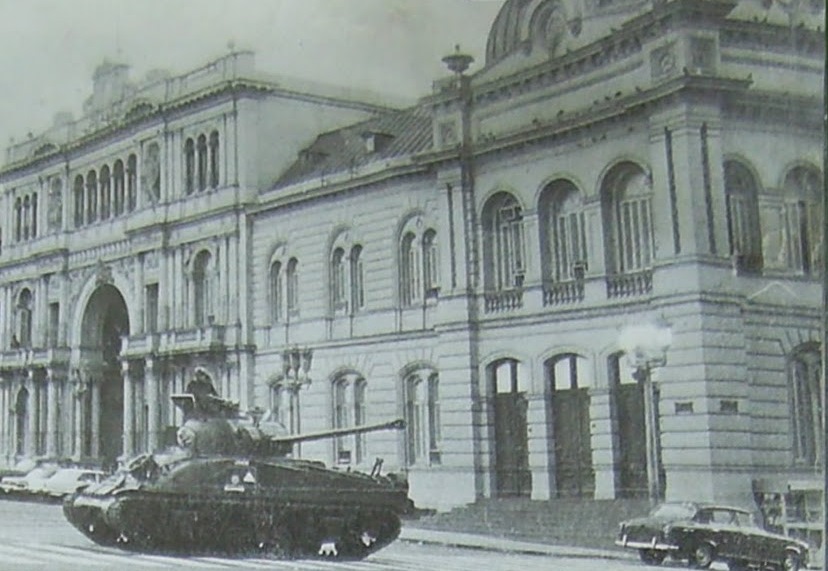
Argentina’s Golpe de Estado, 1976. Photo by Revista Gente, via Wikimedia.

This is an excellent question, as civil-military relations can mean many things. The classic discussion going back to Huntington, Janowitz, Finer and others focused on the possibility of coups and the challenges of keeping the military in the barracks. Over the course of time, scholars have increasingly focused not on coups and their prevention but how to finesse the tradeoffs between control and effectiveness. Why? In part because we take for granted that militaries in advanced democracies will always stay in the barracks. I always use the same example: when Bush and Gore contested the 2000 Presidential election, did anyone ask what the military thought? Not as far as I can tell. The military was never considered to be relevant in this crisis. This is quite distinct from contested elections in less established democracies, where contested elections and coups go together like peanut butter and jelly.

So the puzzle Luis raises is a good one, but let me address the motivations he suggests before considering the bigger one. No, the economic incentives are not so apparent for American, Canadian, British, French, German, and other officers and enlisted personnel. Just to focus on the American case, while officers start out underpaid as their careers advance, their pay not only competes well with the civilian sector (especially once you factor in healthcare and other benefits) but eventually exceeds what average civilians make. The same is largely true for enlisted personnel — the pay is lousy to start but catches up quickly. Plus advanced democracies do not generally have the same kinds of spoils that more fragile countries have. The post-industrial economy is hard to loot, at least it is hard for soldiers to do so.

Coup-proofing is a deliberate effort in authoritarian countries and in new democracies. In advanced democracies, it is not a focus of politicians. Why? Perhaps much of the coup-proofing has already been done. To launch a coup, you have to gamble that you will have enough support from key parts of the military and enough tolerance from the rest. The history of coups shows that this is a coin-flip at best. In autocracies, recruitment is a key issue — does the military over or under-represent ethnic groups, which might provide motivation for some to take power when their privileged situation is threatened?

In the US, Canada, and other multi-ethnic democracies, the military does not replicate the ethnic composition of the society, but their armies are multi-ethnic. Can you count on a multi-ethnic all supporting a seizure of power? Probably not.

But the key for advanced democracies is not incentives or the likelihood of success. There has been a distinction made between a logic of consequences and a logic of appropriateness. People can be focused on what is the most efficient way to get what they want — the logic of consequences — or they can only consider to act in ways that are appropriate. In established democracies, officers and soldiers do not think it is their role to decide political outcomes. They do not think about the possibility of coups because the thought is entirely inappropriate, just as most of us do not consider cannibalism when we get a bit hungry. A coup in America would be unthinkable except that Hollywood reminds us that the military does own many of the guns with movies like Seven Days in May and the new TV series Last Resort. Still, the educational systems on both the civilian and military sides indoctrinate the military’s narrow role in America, Canada, and the rest of the advanced democracies. I am curious about how the French educational system considers the role of the military, given that it is the advanced democracy with the most recent coup attempt. But the central point is that there is such a strong consensus in society and in the military that a coup would be inappropriate that few consider the matter at all.

Of course, the challenge is how to get from a to b: how to get from a weak democracy with a powerful military to a strong democracy with a military that holds a narrower conception of its own role in the society? Time, and hard work. Legitimacy and norms do not happen overnight, no matter how much international organizations like NATO try to inculcate civilian control of the military. Birthing these norms requires powerful individuals to be strong enough to decline power and to refrain from taking it. George Washington ran for only two terms and then stepped down. He had ample opportunities to undermine the United States’ fragile democracy as his term in office faced more than a little bit of rebellion and enjoyed considerable authority. Dwight Eisenhower, with his record in the Oval Office and famous speech at the end presidency warning of the military-industrial complex, reminded everyone that former Generals may not necessarily be a peril for democracy.

This is the classic question for democracy, for institutions, and for political scientists: when do the writing on the parchments matter? When do institutions bind behavior? When people think that they do; when people believe that the rules are binding and act accordingly. In the advanced democracies, we often disagree about many things. We often talk about crises in civil-military relations, but we rarely imagine coups and never plan them. In this case, not thinking about something is the first step towards the best outcome.

Getting it Wrong About Wartime Sexual Violence

By Andrew Mack

Jerrilyn Mulbah, a Liberian-born Nigerian performer, performs as part of the Liberian ‘Stop Rape’ campaign. UN photo by Christopher Herwig, via Flickr.

Prize-winning New York Times columnist Nicholas Kristof has played a critically important role in drawing international attention to wartime sexual violence. But a number of his widely-cited claims have spread misinformation about the extent of sexual violence in some of the worst affected countries.

In a 2009 column Kristof claimed that “as many as three-fourths of women were raped” in Liberia’s civil wars. The provenance of this much-publicized claim isn’t clear from the article in question, but various sources trace its origin to a misunderstanding of a survey carried out by the World Health Organization (WHO) in 2004.

However even a cursory reading makes it clear that the WHO survey report’s data cannot be used support Kristof’s claim.

The survey uses a wholly unrepresentative sample of the national population, selecting “key informants” who “identified other women and girls in their respective communities for inclusion in the study.” More importantly, the survey sample was drawn from women who were already survivors of sexual violence — the fact three quarters of them them had been raped was hardly surprising. The 77 percent figure refers to the percentage of already-assaulted women who were raped, as opposed to having been subjected to other forms of sexual violence (some women were raped and subjected to other forms of violence.) In other words, the WHO report’s findings tell us absolutely nothing about nationwide prevalence of sexual violence against women in war-affected Liberia.

The real rate of sexual violence against females in Liberia during the war periods was very high, but nothing remotely approaching the figure cited by Kristof and endlessly repeated in the media, by advocacy groups, and even in UN publications. In 2007, a major nationwide survey by the Demographic and Health Survey (DHS) organization found that the lifetime prevalence rate of sexual violence among women aged 15 to 49 in Liberia was 18 percent — less than a quarter the rate of Kristof’s much publicized claim. An earlier survey that covered the first civil war by Shana Swiss and colleagues found the prevalence rate to be 15 percent. To put this in perspective, 18 percent is approximately the same as the lifetime prevalence rate in the United States according to a nationwide 2010 population survey undertaken for the Center for Disease Control.

While Kristof’s hugely exaggerated figure has been endlessly repeated, the much lower DHS estimate — which, unlike the 2004 WHO survey, is based on a professionally conducted nationwide population survey — has largely been ignored in the media. It simply wasn’t newsworthy.*

Another widely-cited claim about wartime sexual violence referred to by, among others, Kristof and Cheryl WuDunn in their best-selling book Half the Sky appears to have originated in a 2004 report by IRIN, the well-respected news and analysis service of the UN’s Office for the Coordination of Humanitarian Affairs. The IRIN report stated that

“A staggering 50 percent of all women in Sierra Leone were subjected to sexual violence, including rape, torture and sexual slavery, according to a 2002 report by Physicians for Human Rights.”

The figure would indeed have been staggering had it been what the careful Physicians for Human Rights (PHR) researchers had claimed. But they did no such thing.

The findings of the PHR report made it clear that the lifetime prevalence rate of sexual violence they found in Sierra Leone was 17 percent — which is very high, but little more than a third of the rate the IRIN report cites. Where then did the 50 percent figure come from? The answer is likely a reference in the PHR report to a previous study of violence against women in Liberia that found that 51 percent of respondents had been raped in their lifetime. But this finding was based on a very small and unrepresentative survey sample that should never have been used to make claims about nationwide sexual violence rates.

Misleading claims of shockingly high levels of conflict-related sexual violence like the two cases noted here tend to be accepted uncritically and re-broadcast widely by advocacy groups and the media, sometimes becoming further exaggerated in the process. For example, writing for the Foreign Policy Association  Cassandra Clifford claims that:

“The use of sexual violence as a form of warfare has become an epidemic, in many of the conflicts 50 percent or more of the female population is raped.” (Emphasis added.)

Neither IRIN nor Kristof and WuDunn ever claimed that more than 50 percent of the female population in many war-affected countries were raped and despite many claims to the contrary, there is no evidence that rape as a “form of warfare” is increasing.

If these two cases of misleading reporting were exceptional there would be little cause for concern. Unfortunately, they are symptomatic of what Kelly M. Greenhill has called “the resilience of conflict-related magical numbers … that are deemed to be “true” simply because they are widely believed to be true.”

These resilient ”magical numbers” are not unique to discussions of wartime sexual violence. The problem of inflated war-related statistics is also evident in claims about the worldwide number of child soldiers, civilian deaths as a share of all violent war deaths, and the controversies over war death tolls in Darfur, Iraq and the DRC. The forthcoming Human Security Report examines what drives such inflated claims in the case of dominant narrative on wartime sexual violence, and why they lead to inappropriate policy responses.

*For a highly instructive and far more detailed account of inappropriate reporting on sexual violence in Liberia and the associated “information politics,” see the new JPR article “Dueling incentives : Sexual Violence in Liberia and the Politics of Human Rights Advocacy” by Dara Kay Cohen and Amelia Hoover Green.

Fortress of Solitude: What Does Diplomatic Isolation Actually Do?

By Andrew Kydd

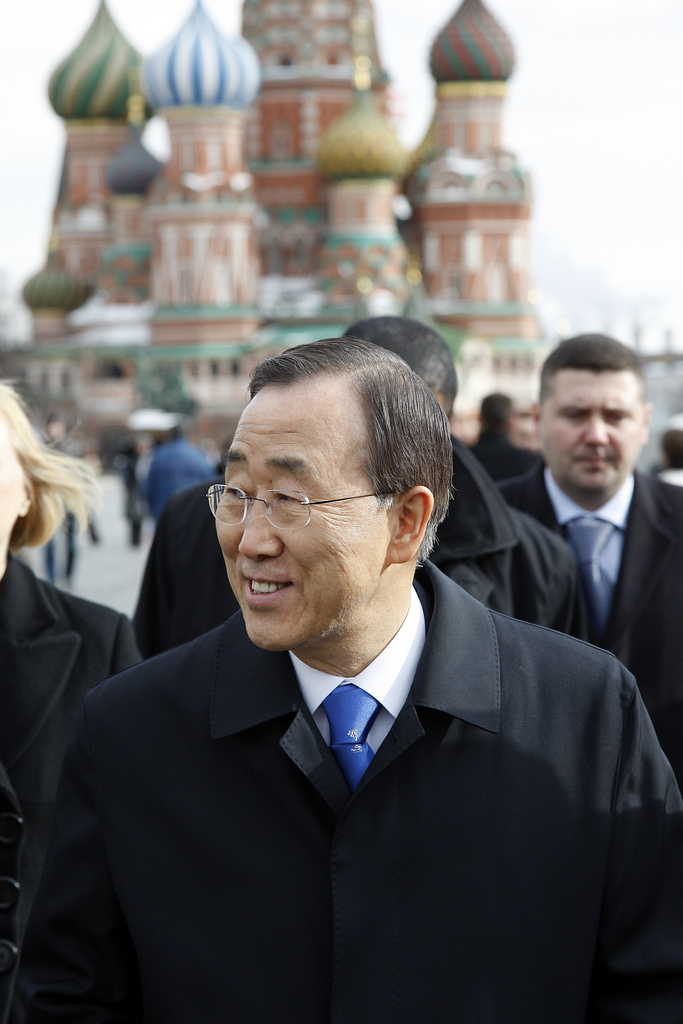
Secretary General Ban Ki-moon in Russia. UN photo by Mark Garten, via Flickr.

Much has been made of UN Secretary General Ban Ki-moon’s decision to attend the upcoming summit of non-aligned countries in Iran. The Israeli Prime Minister Benjamin Netanyahu has criticized the decision to go, saying the visit will “grant legitimacy to a regime that is the greatest threat to world peace and security.” Leaving aside for the moment whether Iran is the greatest threat to world peace and security, it is interesting to think about whether Ban’s visit grants legitimacy to Iran. Would not going deny the summit legitimacy? Thinking more broadly, does the campaign to impose “diplomatic isolation” on Iran actually hurt Iran in any way or have any prospect of changing its behavior, through any mechanism?

Traditionally, the rational choice answer to this question would be no. Deciding to visit a country is a form of what economists call “cheap talk”, or actions that have no intrinsic cost or benefit for either party. Ban’s visit does not boost Iranian GDP, destroy any missiles, or sabotage any centrifuges. It is purely symbolic. In bargaining contexts such as the Western dispute with Iran over its nuclear ambitions, cheap talk is usually thought to be useless, since the conflict of interest between the two parties prevents truthful communication between them.

Nonetheless, the visit has certainly raised hackles and seems to matter. One rationalist explanation could be that diplomatic visits are signals of orientation, and so provide information about where actors might stand in more costly contexts. In a paper for my models of international relations class last spring Rick Loeza proposed an interesting model of UN resolutions. UN resolutions, like diplomatic visits, are cheap. However, they communicate information about where countries stand that could influence beliefs about what might happen in future enforcement contexts. Not every state that supports a critical resolution will ultimately support costly enforcement. But if some states that would not support enforcement would also veto or vote against the resolution, the fact that the resolution passes conveys information to the target, namely, that their circle of potential friends is smaller than they thought it was, and enforcement is consequently more likely. Not certain, mind you, just more likely. Thus UN resolutions, and by analogy diplomatic visits, help countries tally their potential friends and foes in international disputes and can thereby affect behavior even if they are cheap talk.

Of course, around 120 nations are planning to attend the conference, so Iran’s diplomatic loneliness is not too crushing. However, these are the nonaligned states, so it is not clear that the US — much less Israel — will take any heed of their views in forming their policy on Iran. The big exception is Egypt. Egyptian President Morsi’s decision to attend is particularly salient for reasons the preceding analysis makes clear. Militarily and diplomatically Egypt is a very important state in the region. Its cold peace with Israel and hostility to Iran under Mubarak would indicate that it would be tacitly on Israel’s side in an Israeli-Iranian conflict. Morsi’s decision to go therefore provides new information, jarring to the Israelis and encouraging to the Iranians.

Five Big Trends I Saw Travelling Around the World

By Barbara F. Walter

Last spring I had the chance to travel around the world. Mostly in the developing world, and mostly in countries that have experienced political violence at one time in their history. I brought my husband and nine year old daughter because, let’s face it, who wouldn’t want to travel to these places? Our path traced a lazy circle around the globe: Los Angeles to Hong Kong, Malaysia, Myanmar, Sri Lanka, the Persian Gulf, Jordan, Israel, London, Northern Ireland, New York, and Ecuador, then, finally, back to Los Angeles. One of the interesting things about long-term travel is that you begin to see patterns across continents and get a sense of global forces at play. Here are five of these patterns that surprised me:

  1. The world has officially converged on English. Not only that, but English with an American accent appears to have become the new status symbol. Even in remote parts of Myanmar, villagers were learning English. Wealthy Sri Lankan families celebrating a family event at a restaurant spoke English to each other. So did Chinese families in Hong Kong, Malaysian families in Malaysia. Makes one wonder if having your children learn Mandarin is the best use of their time.
  2. That is, everywhere except Latin America. There we couldn’t find a single desk clerk or waiter who could speak English — the frantic push to learn English that we saw everywhere else in the world is absent in Latin America. Español, anyone?
  3. The rest of the world will soon be as fat as today’s Americans are. One of the great things about travelling in less developed countries is the outdoor markets that would make even the most satisfied Whole Foods shopper cry — sob, in fact, at what we are missing here. Still, I’ve never seen so many advertisements for McDonalds and Kentucky Fried Chicken, and so many people thrilled at the possibility of eating there. Americans aren’t fat because we’re less disciplined than the rest of the world. We’re fat because we’re the first to ride the wave of cheap fried food.
  4. Having lots of oil completely screws up a society. I don’t even know where to start.
  5. Women are completely absent from commerce and invisible on the street in large areas of the globe. We went weeks without ever interacting with a woman in a shop, restaurant, or business. The implications were both simple and profound.

The Case Against Intervention

By Erica Chenoweth

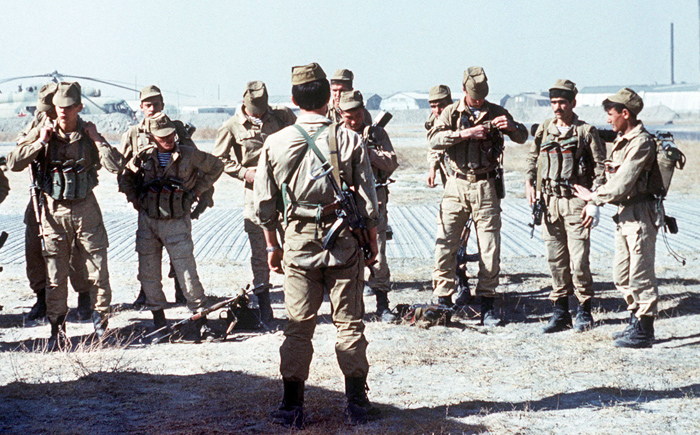
Soviet special operations personnel in Afghanistan, 1988. Photo by Mikhail Evstafiev, via Wikimedia.

How does military intervention affect ordinary people? Does it spare them from violence by the regime, or exacerbate it?

Dursun Peksen has a new article out in Political Research Quarterly suggesting that military interventions increase state repression against domestic opposition groups. Peksen argues that when foreign powers intervene in domestic conflicts, human rights violations in the target country go up considerably. This is true regardless of whether the intervention comes from an international organization or an external  government, democratic or not.

Importantly, the target of external interventionist forces does not matter; interventions that target or support embattled ruling regimes both encourage repressive behavior. Armed interventions in support of governments (e.g., South Africa in Lesotho in 1998) embolden the embattled regimes, granting them more coercive resources and a sense of legitimacy in committing these violations. Armed interventions that are neutral (e.g. United Nations in Bosnia) or hostile toward the embattled government (e.g., US-led intervention in Haiti 1994) are likely to make the regime perceive itself to be under an existential threat, giving it nothing to lose and encouraging even more brutal toward domestic opponents.

The policy implication for humanitarian-minded interventionists is clear. Do you want to spare civilians from human rights abuses? Then unless you are sure you can decisively stop the violence, don’t intervene.

Carrots, Not Sticks

By Erica Chenoweth and Laura Dugan 

We recently published an article in the American Sociological Review in which we argue that Israeli conciliatory actions like negotiations, improving living conditions, and other concessions have been more effective than repression actions — arrests, killings, and curfews — in reducing Palestinian terrorist attacks. View the press release here, and view the study here.

But if negotiation and concessions can reduce terrorism, then why doesn’t the Israeli government do these things more often? We suggest three plausible explanations, although there may be more.

  1. Politics. Israeli leaders may view dovish policies toward Palestinians as too politically risky. Even if there is high voter enthusiasm for a resolution of the Israeli-Palestinian conflict, unilateral Israeli concessions are extremely controversial. A politician embracing such policies may pay for this position at the polls or, in some cases, with his life. With Israel’s changing demography, politics may play an even more important role today than it did twenty years ago.
  2. Genuine fear of backfire. Although our study shows otherwise, a dominant narrative in Israel is that making concessions to Palestinians is ineffective. For instance, after Israel and the PLO negotiated the Oslo Accords, various Palestinian groups responded with a wave of terror throughout the 1990s, culminating in the highly traumatic Second Intifada. It is easy to see such events as representative, but they are not. In fact, we find that conciliatory actions actually had the strongest violence-reducing effects during the Second Intifada, whereas Israel’s militaristic retaliation only exacerbated terrorist violence.
  3. Insincerity about the peace process. The current Israeli ruling elite may simply be unwilling to pay the price for peace, which would a genuine two-state solution. We have our doubts that Netanyahu is serious about the peace process. Instead, he seems content to kick the can down the road, calculating that settlements will continue to expand, Palestinians will remain despairing but only moderately active, and “facts on the ground” will eventually come to favor Israel. On the contrary, our research shows that this course of action does little to make Israelis safer.

What’s in a Name? How to Classify Recent Violent Events

By Joseph Young

The recent tragic events in Aurora, Colorado and Oak Creek, Wisconsin have sparked national debate over gun control, the role of violence in our society, and how to label such events.

What do we call each?  Jesse Jackson and others have wrongly called the Aurora attacks domestic terrorism. Some have wrongly called the killings at the Sikh temple in Wisconsin mass murder. Getting the labels right is important because labeling an individual a terrorist is itself a political act — one that is often wantonly used to vilify an opponent. False labels just muddy the water. We need to move beyond labeling and simply classify similar acts so we can understand them and maybe even create policies to prevent them. It is useful then to distinguish these two back-to-back tragedies to understand how we can help prevent similar violence in the future.

What is terrorism? Most scholars and professionals in the field now agree that three elements are required to meet the core definition for terrorism. First, there must be violence (or threats of violence).  Second, the violence must be targeted to influence an audience. Third, the violence is used in pursuit of a political goal.

To know if the attacks in Colorado and Wisconsin are terrorism or mass murder, we can compare the elements of this consensus definition to the details of the event. Once we have similar events grouped, we can identify patterns and commonalities and hopefully prevent future violent acts.

  1. Islam or Not Islam plus violence does not equal terrorism. Immediately after the Aurora incident, several activists on Twitter were quick to label it terrorism because the perpetrator did not fit the stereotype. I am sympathetic to this critique as both violence by Muslims or simply Muslims have received this label. As the long history of terrorism shows, many ethnicities and religions have perpetrated terrorism. We need, however, to group apples with apples and similar kinds of violent acts with each other so that we can understand their common motives and ways to prevent them. Certainly, the event in Aurora was violent, but it fails to meet the other two required elements.
  2. There must be a political motive. Right now it seems James Holmes’ attack was an apolitical act. What did the perpetrator want? Who was he trying to coerce? Why dress up as the Joker? Any political motive is lost as this is an act of a mentally ill person. What is clear, however, is that this particular brand of mass killings are uncommon events, mostly perpetrated by young white men. Does this rule out religious or cultural motivations for violence? No. Anytime an individual or group is trying to change the behavior of another group, the action is political, whether motivated by religion, culture, or something else. Politics is about power — or, getting someone to do something that they don’t want to do, regardless of the specific motivation. In similar mass murder events (Columbine, Virginia Tech), there was no attempt at coercion or changing anyone’s behavior. In Wisconsin, some observers wanted to avoid the terrorism label and call it murder. While we cannot say for sure what the motives of the perpetrator were, his tattoos, involvement with extreme groups, and published beliefs suggest a political motive. Whether the motive was to instill fear in a larger audience, to spark others to act, or to start a larger conflict is unclear, but these are all coercive actions and thus political acts.
  3. There must be an audience for the violence. Terrorism, as deadly as it sometimes can be, is about fear and not extermination. Mass murder, like the Aurora shooting, is more similar to genocide as the target of the violence is also the audience. As far as we can tell, the concern of the perpetrator in Colorado was killing as many people possible rather than coercing or influencing a larger group. The Wisconsin shooter likely wanted to speak to a larger audience and change their behavior in some way.

Most importantly, it may be quite difficult to predict who the next mass murderer will be, although there were some signals. Predicting who is likely to use violence for political means, while also difficult, is possible.  The Wisconsin attacker posted calls for violence in online forums and his extreme views were well known for nearly a decade. Given this, there are thousands of people with similar views that do not act. Understanding why could help prevent this kind of violence in the future.

Follow

Get every new post delivered to your Inbox.

Join 199 other followers

%d bloggers like this: