Skip to content

Posts from the ‘Foreign Policy’ Category

5 Reasons Why the Obama Administration’s Decision to Offer “Military Support” to Syrian Rebels Couldn’t Come at a Worse Time

By Sara Bjerg Moller

December 2012 AP photo by Narciso Contreras, via Freedom House.

December 2012 AP photo by Narciso Contreras, via Freedom House.

Yesterday’s surprise announcement by the White House that the US will “increase the scale and scope of assistance” to Syrian rebels comes at the worst possible time. Here’s why:

1.)  Too Little/Too Late: Washington’s window of opportunity to alter the course of events in Syria has already come and gone. In fact, America’s ability to influence events on the ground in Syria is probably the lowest it has been since the conflict began. Even on the rare off-chance that the kind of military support the administration is thinking about tips the scale in favor of the rebels, Syrians (and the wider Arab world) are unlikely to thank us. Two years and 93,000 deaths into the conflict, many Syrians will instead resent the fact that it took Washington this long to act. By contrast, a rebel victory would see the Qataris and Saudis praised for their early support. In short, the US will get all of the blame and none of the credit.

2.)  What Red Line? Even putting aside for a moment all of the problems associated with the use of publicly pronounced red lines (and there are many,) the administration’s claim that it is responding to the Assad regime’s violation of Obama’s December 2012 prohibition on the use of chemical weapons is flimsy at best.

The timing is odd and makes the US look indecisive. The Israelis announced back on April 23 they had proof the Syrian military had used chemical weapons. Even before the Israelis went public, however, the British and the French had already provided the UN with their own evidence in the form of soil samples. Obviously the US government had to evaluate the evidence itself before acting, but this is a process that typically takes days or weeks not months.

In fact, our own intelligence community concluded in late April that the Syrians had most likely used sarin nerve gas. Announcing what amounts to a major policy shift in mid-June while justifying the decision on the basis of activity that took place as far back as last year and has been public knowledge since at least April doesn’t quite add up. (Unless of course US officials never considered the possibility that deterrence might fail and had no strategy for dealing with such an eventuality; itself deeply troubling if true.)

Nevertheless, the White House’s assertion that it is intervening now because of Syria’s traversing of the red line is unlikely to convince anybody. Rather than redeem American credibility, the lesson other states are likely to draw is that (at least in the short term) they can get away with crossing well-established red lines while the US government conducts a multi-month internal policy debate on what to do next.

3.)  Escalation. Paradoxically, and tragically, the US decision may actually lead to increased violence in Syria rather than halt the killings. This is because the US about-face comes in the wake of the conflict having already drawn in a number of other actors. If the US was going to intervene at all the best time to do so would have been before regional actors like Hezbollah got involved. Coming in the wake of a more crowded and increasingly sectarianized field, Washington’s room to maneuver is likely to be significantly reduced from what it once could have been. Hezbollah in particular will be emboldened by the news and will probably step up its involvement in the conflict, making any US exit down the road more difficult.

4.)  Kiss Geneva Goodbye. Although the probability that Geneva II would produce a diplomatic solution was never high to begin with, Washington’s announcement yesterday has eroded what little possibility there was of securing an immediate cessation to the fighting. The Obama administration has not only rendered next month’s summit unnecessary, it has effectively put an end to what may have been the last best hope for the international community to stop the violence any time soon. If Washington’s primary aim is to stop the killing then even a temporary respite from the fighting would have been better than a continuation of the war, let alone the escalation that is now sure to follow.

5.)  Schizophrenic US Foreign Policy. The sudden reversal by the administration is bound to leave our allies and enemies scratching their heads. For an administration that has prided itself on its handling of foreign policy yesterday’s policy shift stands in marked contrast to previous successes. And, at least domestically, the announcement will play right into the very narrative the Obama administration spent all last week trying to dispel; namely that the appointments of Susan Rice and Samantha Power as National Security Advisor and Ambassador to the UN mark an interventionist turn in US foreign policy.

In sum, even those who advocated for greater US involvement in Syria over the past year and are happy to see the Obama administration now doing so should be concerned by the timing and manner in which this policy decision has come about.

Why More Violence Means Less Support For US Intervention in Syria

Guest post by Lionel Beehner

President Barack Obama and Chief of Staff Denis McDonough. Official White House photo by Pete Souza.

President Barack Obama and Chief of Staff Denis McDonough. Official White House photo by Pete Souza.

One puzzle about the conflict in Syria: as the fighting grows more violent and death toll climbs above 80,000, among Americans support for a limited military intervention has fallen. Last summer, nearly two out of three Americans supported a no-fly zone in Syria, according to a poll by the Chicago Council on Global Affairs. Recent polls (CBS, Reuters, Gallup), however, show that most Americans oppose any kind of military intervention (assuming there is no proof of chemical weapons use).

The sad reality is that the uglier a civil conflict gets, the less likely Americans will want to intervene to stop it.

Americans are generally wary of intervening militarily to save lives. Call it the “post-Vietnam syndrome.” Sure, they are occasionally supportive of sending humanitarian aid or engaging in missions with multilateral backing. But in Bosnia, for example, before the 1995 Dayton Accords were signed most Americans thought the United States had “done enough” and saw intervention as Europe’s responsibility. Moreover, less than half of Americans supported the 2011 NATO no-fly zone in Libya. Barely 50% backed NATO’s bombing of Belgrade in 1999. Interventions to oust dictators or respond to military coups are equally unpopular among Americans. The 1994 intervention in Haiti to reinstate President Aristide after his 1991 ouster in a coup, for example, had barely half of America behind it. Ditto the 1983 invasion of Grenada.

Americans are only slightly more supportive of interventions that have a tit-for-tat casus belli. The 1986 US attack against Libya, for example, or 1998 air strikes against Afghanistan and Sudan in response to attacks against our embassies in Kenya garnered 71% and 66% support, respectively.

Contrast that with the 90% support for the 2001 invasion of Afghanistan, and 76% support for the 2003 Iraq War.

Paradoxically, the interventions with the greatest public support in recent memory were full-blown ground invasions, not limited interventions for humanitarian purposes, even though the latter poses less risk to American lives. There is, moreover, little correlation between American public support for an intervention and whether the operation actually succeeds or not. The wars in Afghanistan and Iraq were hardly military successes, even though they enjoyed high levels of initial public support. The First Gulf War, meanwhile, which was successful at repelling Saddam from Kuwait, only enjoyed tepid support at best (37% in favor of military action, inching up to 53% after the November 1990 UN resolution to use “all means necessary”).

After several months of punitive air strikes, the NATO interventions in Kosovo and Libya resulted in the eventual ousting of two dictators, Slobodan Milosevic and Muammar Qaddafi, respectively. The aftermaths of both interventions were not pretty, but their stated aims – to prevent a humanitarian catastrophe – were largely met. While the military objectives of humanitarian interventions are obviously more limited than those of full-scale invasions, by and large our track record of intervening for humanitarian purposes is better than our record for going in for other (less noble) reasons.

Another factor that makes US intervention even less likely: The public tends to show stronger support for interventions led by Republican administrations. Democrats typically intervene under less clear mandates for reasons not always directly linked to protecting US strategic interests. That is not to say that they intervene for idealist reasons while Republicans only intervene when US national security is at stake – after all, Bush Sr. intervened in Northern Iraq in 1991 to protect Kurdish refugees and the following year intervened in Somalia to save innocent lives. Obama, meanwhile, is the one who violated Pakistani sovereignty to take out Bin Laden (By the way, Americans remain very supportive of targeted killings by pilotless aircraft. The use of drones in Yemeni, Somali and Pakistani territory, despite their dubiousness under international law, enjoys 83% approval ratings, according to a February 2013 Washington Post/ABC poll).

In short, the American public remains a poor handicapper of how interventions will turn out – what’s popular isn’t necessarily what’s smart or doable. Aside from drone strikes, the bigger or riskier the intervention, it would seem, the higher the level of public support. Perhaps there is a rally-around-the-flag effect. Or perhaps we only select into interventions with ground forces when our most vital interests are at stake.

This effect brings us back to Syria. If an intervention there was sold as an effort to protect US strategic interests in the region – to weaken Iran and its Shiite proxies, perhaps – and not as a mission to prevent Muslims from slaughtering other Muslims, more Americans would probably rally around the cause.

Lionel Beehner is a fellow with the Truman National Security Project, a doctoral student at Yale University, and a term member at the Council on Foreign Relations, where he is a former senior writer.

Correction: This piece originally stated that the 1994 US intervention in Haiti was intended to remove President Jean-Bertrand Aristide, not Haiti’s military regime. Click here to view the corrected sentence.

R2P ~ Regime Change

By Steve Saideman

US soldier in Afghanistan. US Navy photo by Lt. Benjamin Addison, via ISAF Media.

Andrew Kydd argues that R2P is not equal to regime change, which is technically true. However, in many, but not all, cases it is hard to see how one can ensure that the people of a country can be protected responsibly given the regime that exists. The problem here is a basic one for scholars of International Relations and of Politics in general: how do you get a dictator to commit to stopping their abuses of the population?

Aye, there’s the rub. It is hard enough for democracies to commit to protecting their civilians and sticking within the rule of law. The recent events in Turkey, the over-reaching by Bush and Obama administrations, and other examples show that even where institutions are seen as being quite important, and where the rule of law is quite stable and legitimate, governments can abuse their citizens. In authoritarian regimes, especially personalist ones where power lies in individuals and not institutions, leaders have a hard time binding themselves to a particular course of action, including not abusing their population.

Kydd is right that NATO took the R2P mandate from the UN for Libya, and ran it all the way to regime change. Talking to officers who participated in this effort is entertaining as they dip, dodge and duck the regime change label, as they “protected” civilians and used force on their behalf but “technically” did not side with rebels against the Libyan government. But given the start of the conflict and Qaddaffi’s previous behavior, it is not clear how Qaddaffi could have assured the world and, more importantly, the Libyans, that he would stop engaging in politicide. How do you flip the switch from being a dictator engaged in ruthless oppression to one that responsibly protects the population?

In the case of Syria, how would one apply R2P without getting rid of Assad? There are two parts to this, of course: (a) Assad would have to tie his hands and those of his repressive apparatus; and (b) his opponents would have to stop using violence as well. Otherwise, the cycle continues. One could argue that outside interveners could provide the credible guarantees (that would be PV@G editor Barbara Walter’s argument), but it is not clear that outsider interveners can credibly commit to thwacking either side of a conflict when the terms are violated.

Kydd points to the success of the NATO effort in Bosnia, as an R2P-ish (it was before R2P was fully enunciated) success — that NATO stopped the fighting without changing the regimes. The better example might be Kosovo. Kydd indicates this was not regime change because NATO did not get rid of Milosevic. Well, sort of. By facilitating the secession of Kosovo, de facto long before de jure, NATO did change who governed that territory. Milosevic had proved to be unreliable and unconstrained when it came to using force against the people of Kosovo, so NATO ultimately changed the regime of that territory, leaving Milosevic in place for the rest of Serbia.

To be clear, I am not an advocate of intervention in Syria, nor am I an R2P advocate (nor a neo-con). There are many good and bad reasons to intervene in Syria, and many good and bad reasons not to intervene in Syria. But if one wants to buy into responsibility to protect, it is hard to see how any outcome that would leave Assad in place could fit into the category of responsibly protecting. Why? Because I cannot imagine a political solution, a negotiation, that would bind Assad credibly unless Assad were to accept permanent occupation by NATO troops as peace enforcers. Given austerity and all that, Assad’s credibility is not the only missing ingredient, but it is a key one. Until someone figures out a way for rulers in authoritarian regimes to make credible commitments, the line between R2P and regime change will remain mighty fuzzy.

The Attack on the ICRC and the Changing Conflict in Afghanistan

By Jason Lyall

US Army photo by Sgt. Benjamin Tuck.

US Army photo by Sgt. Benjamin Tuck.

On 29 May, the International Committee of the Red Cross (ICRC)’s compound in Jalalabad, Afghanistan, was breached by three suicide bombers from an as-yet unidentified insurgent organization. The attack left one Afghan guard dead while wounding another (expat) ICRC staffer.

While the war in Afghanistan has largely slipped from the public’s radar screen (and that of the media), the ICRC attack merits a closer look since may represent a qualitatively new phase in the war. Indeed, in the words of Kate Clark, the attack has “crossed a red line” in the war, for the ICRC occupies a unique position as the most respected NGO in Afghanistan — including by the Taliban itself. Relying exclusively on its reputation for neutrality for protection, the ICRC monitors compliance by all sides with the laws of war; arranges for the return of war dead to their homes for burial; conducts site visits of prisons; and provides medical assistance to civilians and combatants regardless of their allegiance.

Wednesday’s attack represents the first time that its offices have been targeted since the ICRC first arrived in Afghanistan in 1987. There’s little question that this attack was deliberate rather than accidental. So why attack the ICRC?

Two reasons stand out. First, the ICRC attack should be placed in the wider context of an on-going campaign by insurgents to target the international (aid) community in a bid to sever Kabul’s financial lifelines. Nearly all of the major aid programs, including those by USAID, the World Bank, and other international donors, are currently in the midst of wide-ranging assessments of how (and whether) to provide assistance in areas no longer secured by the International Security Assistance Force (ISAF).

As ISAF draws down, these aid organizations and NGOs — now used to working near, if not with, ISAF — must now determine whether they can continue programming in areas secured only by Afghan forces. In just the past week, attacks against the International Organization of Migration (IOM) on 24 May (which I watched from my rooftop), the ICRC, the governor’s compound in Panjshir province, and several foiled suicide attacks in Kabul have underscored the potentially precarious nature of security for foreign organizations and their government partners.

There is, then, a strategic logic at work in these attacks. Cut Kabul’s financial lifeline by forcing aid programming to grind to a halt, and it becomes much easier to subvert or erode the reach of shaky government ministries. Even if these organizations and NGOs do decide to continue their efforts (if at a reduced scale), these attacks reinforce and deepen the divide between aid workers and the local populations they are trying to help. As Roland Paris recently noted, one of the principal reasons behind the failure of state-building in Afghanistan has been the disconnect between international aspirations and Afghan needs created by the absence of local knowledge. Attacks like those against the ICRC will undoubtedly force a new round of security measures that will only further build a wall between aid workers and local populations at a time when NGOs are already struggling just to visit their aid sites.

A second, perhaps indirect, reason for the attack stems from the nature of ISAF operations in Afghanistan. One legacy of sustained airstrikes and night raids against senior and mid-ranking insurgent leaders has been the decentralization and radicalization of the Taliban (and Haqqani) insurgency.

At this point in the war, it is misleading to speak of “an” insurgency. Even the Taliban, perhaps the most centralized insurgent organization in Afghanistan, has become increasingly staffed and driven by young local commanders with little connection to the “old” Taliban. In a telling sign, there are now reports that Pakistan-trained Taliban cadres are being inserted back into Afghan Taliban command structures in an effort to reverse this trend. In the past two years, insurgent groups in eastern Afghanistan have borne the brunt of these airstrikes and raids, and so it unsurprising that these new commanders have chosen to demonstrate their mettle by launching high-profile suicide attacks, including four in Jalalabad alone just since December 2012.

“Radicalized” does not mean “crazy,” however. It is apparent that the responsible group took precautions to avoid Afghan civilian casualties when attacking the ICRC. (UPDATE: The Taliban have denied responsibility for the attack.) The attack was timed for 6pm, when all Afghan workers would have gone home for the night. And the location itself — in Jalalabad, a city (and region) with strong Taliban support — appears chosen to minimize fallout if the attack did kill Afghans. Populations with strong pro-insurgent support tend to be much more forgiving of civilian casualties inflicted by the rebels, for example, than they are of similar casualties inflicted by the counterinsurgent.

In short, while new facts will undoubtedly come to light, the 29 May attack against the ICRC may foreshadow the changing nature of war over the coming year in Afghanistan. If the ICRC attack is any guide, we are likely to witness a continued shift away from insurgent violence against dwindling foreign forces and toward a deliberate targeting of aid organizations and government ministries in high-profile attacks. These attacks, in conjunction with efforts to destroy or subvert Afghan security forces, will place international organizations and NGOs in an increasingly tight bind: continue programming and suffer losses, or head for the exit?

R2P ≠ Regime Change

By Andrew Kydd

USAF photo by Staff Sgt. Lee F. Corkran, via (a href="http://commons.wikimedia.org/wiki/File:Mark-84_bomb.jpg">Wikimedia.

USAF photo by Staff Sgt. Lee F. Corkran, via Wikimedia.

We are now past at least 70,000 dead in the Syrian conflict and mass atrocities are being committed on an almost daily basis. The Syrian government has mobilized thugs who appear to lack any military discipline or accountability. Yet Washington takes notice not of real massacres committed with ordinary weapons, but of marginal uses of chemical weapons that have killed comparatively few. Washington inches towards military support of the rebels as if this is the appropriate next step, like a medieval doctor who grimly decides the time has come to put leeches on the arms as well as the legs of a dying patient. Meanwhile, we are treated to the absurd suggestion that we should invade Syria and reconstruct the state in order to intimidate Iran into giving up its nuclear program, which calls to mind Einstein’s definition of insanity, doing the same thing over and over and expecting different results.

Part of the problem is that Washington equates intervention with regime change. In Libya, UN approval for an intervention to protect civilians was used as a license to overthrow Qadaffi. To outward appearances, there was no serious reflection in the administration about this, and no one arguing that this was a mistake. This stands in marked contrast to two previous cases. First, under George H. W. Bush, the US scrupulously observed the international mandate to evict Iraq from Kuwait, but did not go on to overthrow Saddam Hussein. Neo-conservatives then began the long march to 2003, when this restraint would be abandoned, with results that are plain to see. Second, in the Kosovo case in 1999, NATO conducted, without UN permission, an air campaign to evict Serbian forces from Kosovo. The campaign ended before Milosevic was overthrown, although it did decide the issue in favor of the separatist rebels. But in neither case was intervention equated with regime change. We seem to have lost sight of this possibility, in particular, we are unable to envision any form of intervention that would protect civilians in a civil war that does not involve supporting the rebel forces. This is an enormous failure of imagination on the part of US policymakers. As we fail to come up with effective policy options, tens of thousands of Syrians are dying and the future of Syria as a unified country is increasingly cast into doubt.

Let’s therefore unbundle the protection of civilians from regime change, total victory, boots on the ground, and other things that do not necessarily go together. In particular, let’s remind ourselves of the Dayton agreement that ended the Bosnian war. In that case, airpower was brought to bear against Serbia, but not to the point of total victory for the Bosnian Muslims and Croats. Instead, it was used to convince the Serbs that total victory was beyond them, and to facilitate the creation of a front line that would be the basis for subsequent negotiations. Those negotiations then became the focus, and neither side got what they wanted. However, the killing stopped. The resulting state of affairs can hardly be called a unitary state, and it might have been just as well to arrange an outright partition. And yet, thousands of people are alive today who would be dead if the US had not acted as it did. Despite the counsel of the critics of “liberal interventionism”, that counts for something.

When the Going Gets Tough, Fake It?

Guest post by Victoria Piccione

Image by Photoshop, via David Cenciotti.

Image by Photoshop, via David Cenciotti.

This January the Iranian government announced that it had successfully launched a monkey into space and returned it safely. The announcement became comical when, even to the untrained eye, it was obvious that the monkeys photographed before and after the flight were not one and the same (the Iranian government maintains that the discrepancy was due to a mistaken photo release). Equally laughable was Iran’s recent release of clearly Photoshopped pictures of a new “stealth” fighter jet — a model that critics claimed was undersized and seemingly made of fiberglass. While Iran’s technological leaps would be cause for concern if they were legitimate, they have been nothing more than elementary hoaxes.

Why would Iran (so weakly) seek to deceive the United States, a country with powers and capabilities far exceeding its own? Perhaps these announcements aren’t directed at the American government at all — instead, they are a form of international signaling about the internal Iranian state. The ease with which Iran’s faked technological achievements have been disproven suggests that these claims do not serve to destabilize the international environment; rather, they are directed at improving Iran’s crumbling domestic situation rather than threatening the US. Fearful of heightened internal strife, Iran’s government did what any reasonable, struggling regime would do: it staged a diversionary campaign.

Less costly than overt military moves, reports of technological advancements serve a diversionary purpose by attempting to rally public support through distracting citizens. Yet unlike other regimes’ bellicose diversionary threats, Iran’s attempts to divert the public’s attention away from economic struggles and towards recent scientific achievements creates national pride predicated on economic potential.

In light of these apparent motivations, Iran does not seek to threaten the US and other world powers with announcements of technological innovations. Rather, another possibility consistent with the evidence is that these pictures are forged so as to signal that the announcements are primarily directed at the Iranian people. Ahmadinejad wants the public to believe Iran’s tech programs are thriving, and highly censored media allows him to accomplish this. However, the photos are clearly bogus so that other countries are aware that Iran’s technologies still pose no threat to them.

This interpretation suggests that it would be unwise to take any immediate action. Ahmadinejad is claiming technological breakthroughs to salvage a deteriorating domestic situation, and making such claims known internationally serves two primary ends: (1) it makes his claims credible nationally, and (2) it creates some transparency and avoids confusion that could result in the security dilemma.

Of course one might argue that the threat presented by the creation of a stealth fighter jet and the one suggested by a monkey’s trip into space are different. But the technology necessary for launching a rocket into space is fundamentally the same required to build an ICBM. Thus, that astronautical monkey could actually induce the security dilemma — had it truly made it among the stars! The stealth fighter jet, were it real, does not represent the same grave threat an Iranian ICBM technology. Curious George, on the other hand, does. In either case, however, both were nothing more than farces: George has likely not yet experienced the unique sensation of zero-gravity, and the “fighter jet” remains firmly grounded… as does Iran’s technology programs. Properly analyzed, the security dilemma is induced in neither case.

Iran offers an important lesson on how to cope with internal upheaval: when the going gets tough, fake it. Don’t pick fights with someone many times your size. And most importantly, be self-deprecating abroad and deceptive domestically. The US should keep this in mind so that no rash actions are taken. Intelligence proves most useful when it’s collected and interpreted with domestic political motivations in mind.

Victoria Piccione is a student at Harvard College.

Friday Puzzler: Why Lie About Benghazi?

By Barbara F. Walter

It’s now increasingly clear that Obama knew as early as the evening of September 11, 2012 that the attack on the US embassy in Benghazi was the work of al Qaida-affiliated terrorists. Gregory Hicks (the deputy chief of mission at the US embassy in Tripoli) said he knew immediately. Susan Rice certainly knew five days later when she went on all the Sunday talk shows insisting the attack was the result of a spontaneous reaction to a YouTube video. If Obama knew the attack was the work of terrorists, and he knew that everyone at the embassies in Libya knew it was a terrorist attack, why did he try to hide this from the American people? Obama must have known that the information would quickly leak out, and that this revelation would make him and his administration look even worse.

So today’s puzzler is this: Why did Obama lie to the American public about the nature of the Benghazi attack?


Last week’s puzzler asked why the garment-factory tragedy in Bangladesh uncharacteristically caused Western retailers to rethink operations in that country. I think there are three possible answers to this question. The first is that retailers were simply engaged in a PR game and had no intention of moving operations elsewhere. As Taylor Marvin pointed out “the newsworthy, singular character of the collapse” made it impossible for retailers operating in Bangladesh to ignore the tragedy. They had to offer some response and verbal statements to the press were easy and costless.

The second is that retailers were sincere in their concern about working conditions in Bangladesh, and their threats to leave the country were real. If this was the case, the question is why now and why Bangladesh? I think retailers are willing to pull out of Bangladesh because (a) there are so many other cheap places to manufacture clothes, and (b) Bangladesh represents the bottom of the barrel in terms of working and operating conditions. It’s easy to pull out of Bangladesh if there are numerous better places to go.

But there’s a third, more hopeful reason. An article yesterday by Stephanie Clifford reveals that American consumers are increasingly interested in the origins of their clothing and are willing to pay more for a t-shirt that isn’t made in a sweat shop. If consumers demand to know where and how their clothing is made, operating in the current conditions in Bangladesh becomes a losing business proposition.

Which do I think is the best answer? # 2. I’m not holding my breath that clothing manufacturing will come back to New England anytime soon. Still, it’s nice to know that consumers are beginning to care. Artisanal t-shirts anyone?

NATO and Churchill Yet Again

By Steve Saideman

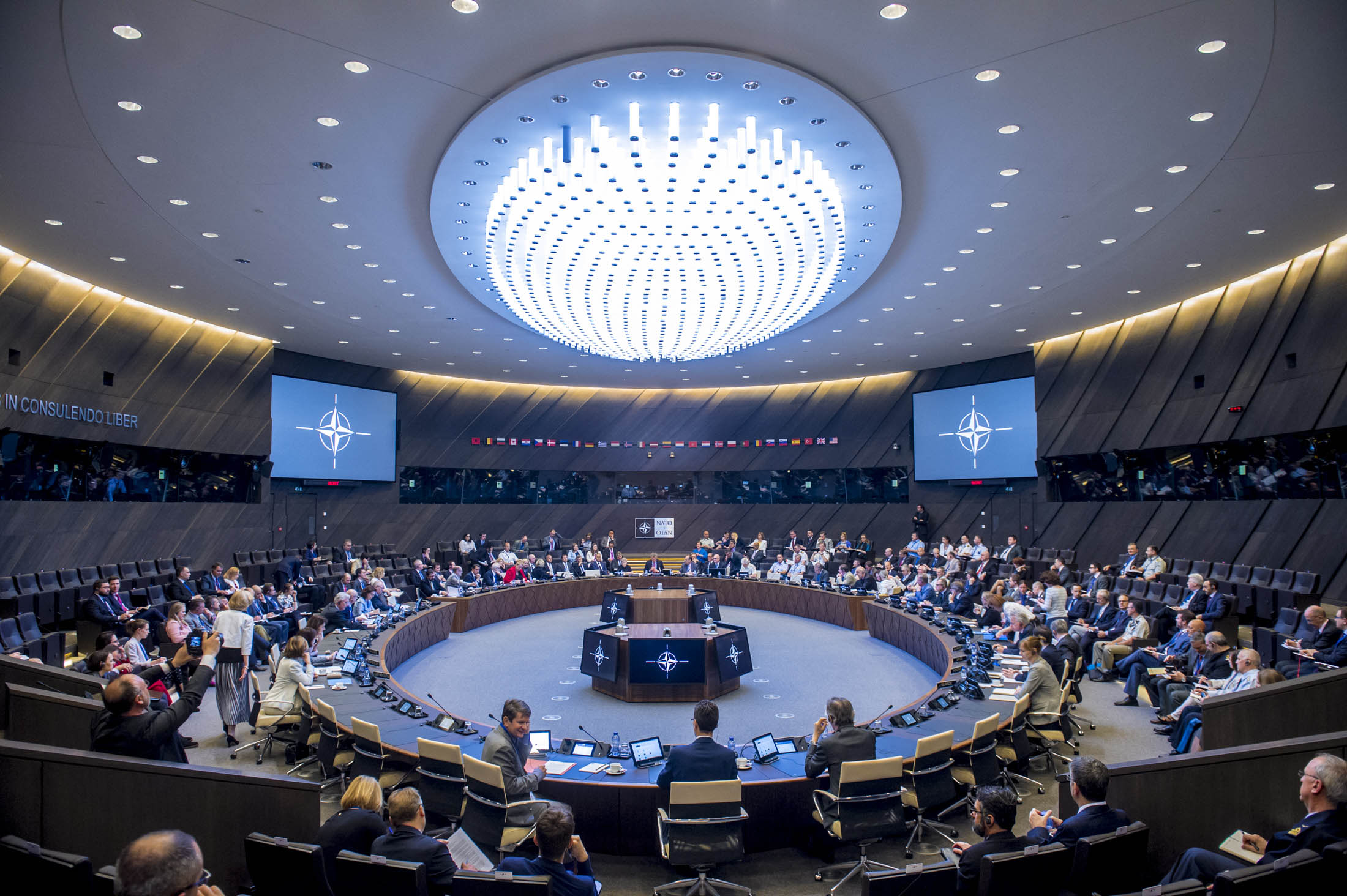
Almost since the alliance was created, there have been worries about the inefficiency and potential demise of the North Atlantic Treaty Organization [NATO]. The alliance’s burden-sharing has always been uneven, raising resentments among those who over-pay. In Afghanistan, the burden-sharing problem has been far more problematic as it is measured in blood, rather than spending as percentage of GDP. The perceived lack of effectiveness in Afghanistan and NATO’s refusal to engage in Syria feed these fears about the alliance. So, it should be no surprise that in this time of austerity there is much concern about the future of NATO once again.

The reality is, as always, just a bit more complex. If we want to ask “is NATO worth it?” by looking at its past efforts, we need to keep in mind the goals of each operation. If we remember that in most cases NATO’s goals were somewhat limited, then the alliance has been rather successful. In Bosnia, NATO did not end organized crime or produce functional democracy, but it did provide a far more credible force than UNPROFOR, enforcing much of the Dayton Accords. In Kosovo, NATO ended the threat Serbia posed to Kosovo’s Albanian (and Muslim) majority. The effort took months, rather than days, and produced a peacekeeping mission that continues to this day. But in terms of preventing the conflict in Kosovo from spilling over to create regional tensions, the intervention worked. In its aftermath tensions rose in Macedonia, which, for once, NATO jumped on quickly, producing an agreement that required relatively minimal effort to enforce.

Afghanistan is far more complex than these other missions, and NATO certainly over-reached. Building a self-sustaining Afghan government turned out to be far harder than previous efforts. The stresses revealed the seams in the alliance far more than the previous or more recent missions. Even in this case, NATO did not utterly fail. Yes, there were problems with caveats, nationally imposed restrictions on what countries were willing to do, and other means of control that impacted NATO’s effectiveness, but more countries provided more real effort in Afghanistan, despite the costs and the uncertainties than the “willing” countries in the coalition of the willing in Iraq.

The Libyan mission is an interesting contradiction, as NATO had far more limited objectives here but these objectives were far more than what some of those who legitimated the mission (Russia, China, the Arab League) expected. The aim of civilian protection became regime change (because the former logically required the latter), although everyone will deny that. Still, NATO made no commitment to do anything after Qadhafi’s government fell, so the alliance achieved what it set out to do. Sure, the burden-sharing was visibly lop-sided with less than a third of the alliance willing to drop bombs, but NATO’s history of procuring and practicing inter-operability meant that planes were able to refuel in the air many, many times without significant incidents.

Much more quietly, NATO has played a key role in fighting piracy off the shores of Somalia. In the past year, pirate attacks have dropped to near zero. Non-events tend not to get much news, especially when they “occur” at sea. To be sure, this change is not just due to NATO’s efforts, but the coordination provided by the alliance has certainly made a difference.

Sure, NATO is in a crisis right now, as the budget cuts throughout the alliance will only make it harder for the alliance to deploy and will probably exaggerate the burden-sharing problems. Moreover, Europe is more than a bit worried about the American pivot to Asia. Yet the reality is that there is no substitute for NATO in European security. It is easy to dismiss suggestions that the European Union will supplant NATO. The EU has repeatedly failed when called up to act in a crisis, only deploying after NATO does all of the hard work. All efforts to develop a European Security and Defense Policy are stymied by disagreements among the members. Coalitions of the willing may develop when NATO cannot come to a consensus, but these coalitions have all of NATO’s problems (caveats, burden-sharing) and none of NATO’s advantages (legitimacy, practiced inter-operability, etc.)

It always comes down to this: NATO is the worst form of multilateral military cooperation… except for all of the other forms. NATO is generally better than unilateralism, far more functional than UN or EU security cooperation, and mostly superior to coalitions of the willing. Consequently, despite the anxieties, NATO will continue to stick around for a while longer. It may not intervene again in any place soon, but when leaders look around for some military cooperation, NATO will be there.

On the Perils of Red Lines

By Erica Chenoweth

Barack Obama meets with his national security team. Official White House Photo by Pete Souza.

Barack Obama meets with his national security team. Official White House photo by Pete Souza.

  • Our very own contributor Dan Byman has an op-ed in the Sunday New York Times arguing that Obama shouldn’t draw red lines. His article assumes that Obama meant to draw the red line at chemical weapons use, which seems dubious now that…
  • The selfsame edition of the Times has printed a front-page piece suggesting that Obama didn’t really mean to draw a red line at the use of chemical weapons. Instead, mentioning the red line was “unscripted” and “off the cuff.” I can sort of see how this could happen. At this point, the international illegality of the use of chemical weapons (especially against civilians) is fairly noncontroversial. Violation of a norm that the rest of the world has taken for granted since World War I would easily put Syria back into the “rogue state” category. My guess is that someone asked the president “What is the US’ red line on Syria?,” he simply retrieved the easiest “off the cuff” red line that sprung to mind, and choosing chemical weapons use because (a) everyone knows it’s abhorrent; and (b) he thought that Assad would never do it; so (c) the US would never be called to action. Others take issue with this standard, but the rest of the administration has since viewed it as a safe bet and has returned to this red line routinely. This may be complicated by the fact that…
  • A UN investigator reports that it may be rebel groups, rather than the Assad government, who have used chemical weapons. It’s important to emphasize that this report is based on somewhat inconclusive evidence. [Update: The Syrian rebels have vehemently denied this claim.] But if true, it highlights a moral hazard problem – the fact that opposition groups may deliberately provoke or even cross the red line in order to generate an international intervention that (they think) would tip the balance in the favor.
  • On the other hand, Israel has no problem drawing red lines. Benjamin Netanyahu notoriously drew a red line when it came to Iranian nuclear proliferation, and in recent days, Israel has launched several “defensive air strikes” against unnamed targets assumed to be sites of weapons transfers to Hizballah. The Israeli government has an explicitly low tolerance for Iranian missiles or chemical weapons falling into the hands of its more immediate enemies. But when the Israel Embassy’s spokesman was asked about the recent air strikes, he provided a definitively scripted response: No comment. But the message is clear to Iran: Israel responds with force when Iran shares weapons with Hizballah, and Israel will respond with force if Iran approaches the red line on nukes.

Regardless, it is clear that neither the enforcement nor the non-enforcement of red lines has halted the killing of civilians as the Syrian tragedy unfolds.

Thursday Mystery of the Week: Canada the Bold and Sri Lanka

By Steve Saideman

Canada is taking a strong stand on a humanitarian issue, stepping out way in front of the rest of the world. The issue is Sri Lanka’s human rights abuses, and Canada, often seen as the most mild of countries, is upset that no one else is concerned about Sri Lanka hosting the biennial Commonwealth meeting:

“John Baird, Canada‘s foreign minister, said he was stunned that Colombo was not facing censure for its behaviour. ‘We’re appalled that Sri Lanka seems poised to host [the Commonwealth Heads of Government Meeting] and to be chair-in-residence of the Commonwealth for two years,’ he told the Guardian.”

Canada is threatening to boycott the meeting. This is especially striking as the current government has been doing everything it can to remind everyone of its British/colonial past, including putting the “Royal” back into the names of the air force and navy: the Royal Canadian Air Force and Royal Canadian Navy. So, the prospect of skipping out on a Commonwealth event is a big step for this Canadian government.

Sure, in the past Canada has taken the lead on other humanitarian issues, such as Responsibility to Protect [R2P] and the treaty on landmines. But this particular government, led by Stephen Harper, has been most reluctant to even mention R2P when it engages in efforts that might seem R2P-ish, such as the Libyan conflict in 2011.

Not to dismiss the importance of Sri Lanka’s human rights record, but there may be something more consistent in Canada’s stance here: ethnic politics. Sure, it could just be my cognitive bias based on my previous research stances, but playing up an anti-Sri Lanka stance is a way to appeal to a key voting bloc in Canada: Tamil Canadians. This would not be the first time that Canada has taken a surprising position on this part of the world, as Canada was perhaps the last developed democracy to list the Tamil Tigers as a terrorist group. Indeed, a government official recently lamented that decision in front of… a group of Tamil Canadians.

This gets to a larger issue for observers of violent conflict. There are many, many potential causes for individuals, groups, and countries to take as their own, but everyone has finite time and political capital. So, we need to ask why countries, in particular, but also non-governmental actors make particular issues their priorities. My claim has always been that the international issues that often resonate most at home are those places and those sides with which key constituents have ethnic ties. So, I cannot help but notice that Canadian parties have been pandering to the Tamil Canadians for quite some time, and now we see Canada standing alone among the Commonwealth countries in its criticism of Sri Lanka.

Now, if I can only figure out Harper’s obsession with Iran. Anyhow, this Canadian tale matters beyond Canada because it reminds us that even relatively small ethnic groups can shape foreign policy if they occupy key districts and especially if they are willing to swing their vote depending on how much fealty the parties show to the group.

Follow

Get every new post delivered to your Inbox.

Join 200 other followers

%d bloggers like this: